Activity : Net environnmental impacts of a solution
Duration : 45 mins
Format : Class discussion
Today, there is an effort to improve the methodology for defining avoided emissions, thanks in particular to digitisation. These include the ITU-T L.1480 standard, the European EGDC methodology (under construction) and Carbone 4’s Net-Zero Initiative for IT. These documents have come to light because the way in which avoided emissions are defined has so far been very confused, leading sometimes to false claims.
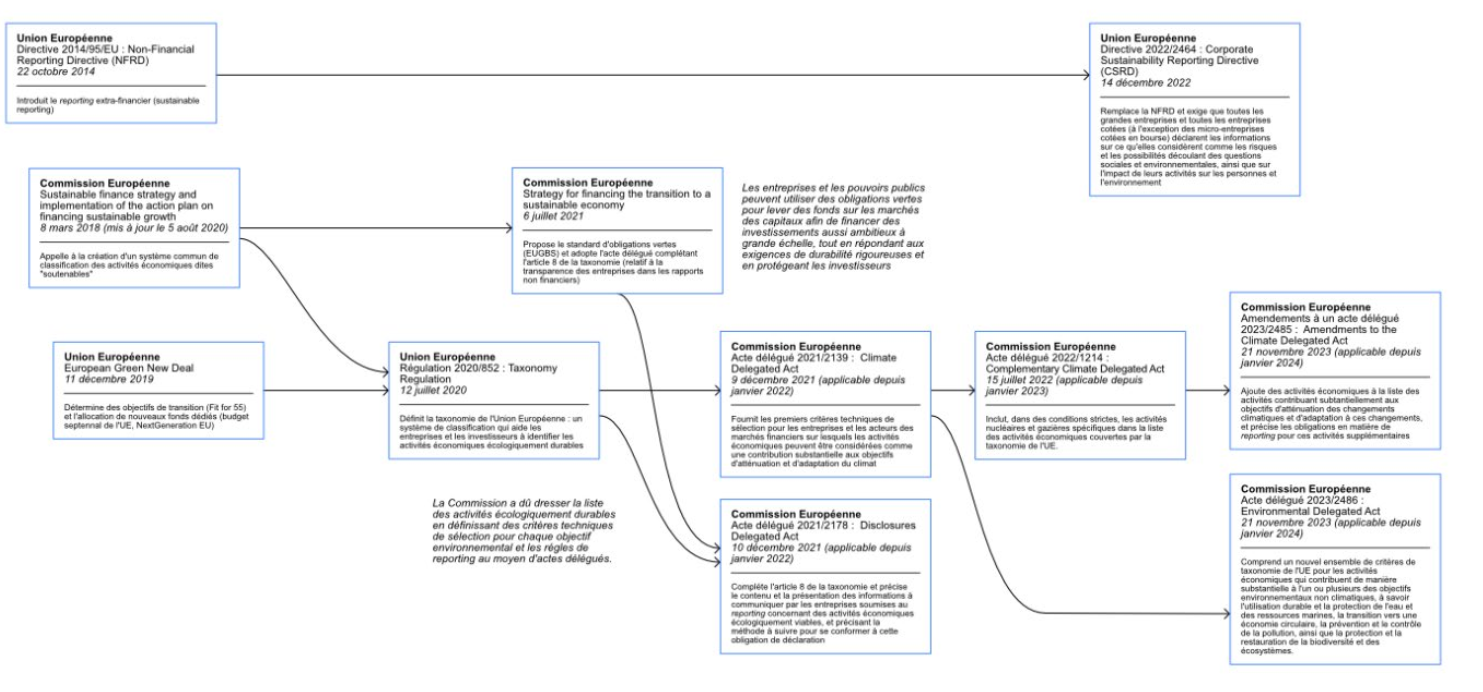
Because ecological transition policies are still largely underfunded, estimating avoided emissions is now of strategic interest, as proving that one is helping to decarbonise other sectors will give access to preferential financing and attract new investment. For instance, the european taxonomy on sustainable economic activities includes data-driven solutions for GHG emissions reductions. It is therefore necessary to review the foundations of these methods.
Assignment
1 - Identify a digital solution
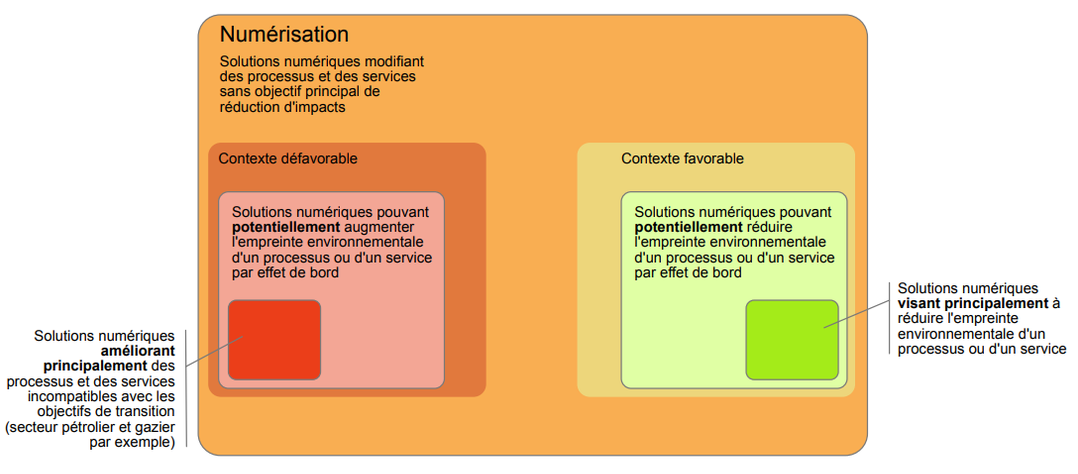
An important bias produced by the vision of avoided emissions is that it only focuses on solutions that have the potential to mitigate the environmental impact of other activities. In reality, the vast majority of digital solutions are not considered to reduce the environmental impact of other activities. Even worse, digital solutions are also used to enable economic activities that hinder the ecological transition, such as in the oil and gas industry.
Therefore, selecting a solution to study is a significant decision that is often biased, particularly in the context of organisations that wish to claim avoided emissions. Some methods recommend stating the share of revenue produced by the analysed solution to provide context for the potential avoided impact in relation to the organisation’s overall activity.
Important
Select a digital solution that as potential to reduce the impacts of an activity
2 - Study the context of implementation
A digital solution never has an impact on its own. It is always the combination of the solution and the context in which it is implemented that creates an effect. For instance, introducing a carpooling app in a city with significant policies favouring this activity, such as economic incentives and infrastructure, will not have the same effect as in a city with no such policies.
Several types of contextual parameter could be important:
- Local policy
- Weather/climate
- Topography
- Energy sources
- State of the infrastructure
- Shape of production
- Shape of consumption
- Transition plan
Important
Select the intended deployment context and identify the main contextual parameter that could influence the solution
3 - Choose a reference scenario
Unlike other activities such as carbon capture or reforestation, digital solutions never remove environmental impacts in a physical sense. In reality, digital solutions can reduce the emissions of an activity in an accounting sense. Indeed, avoided emissions are always avoided in comparison to a reference scenario, which is a hypothetical situation in which the solution hasn’t been deployed. In reality, it is impossible to determine with certainty the “what if” scenario. Therefore, choosing a reference scenario, which influences the final result, is subject to political vision.
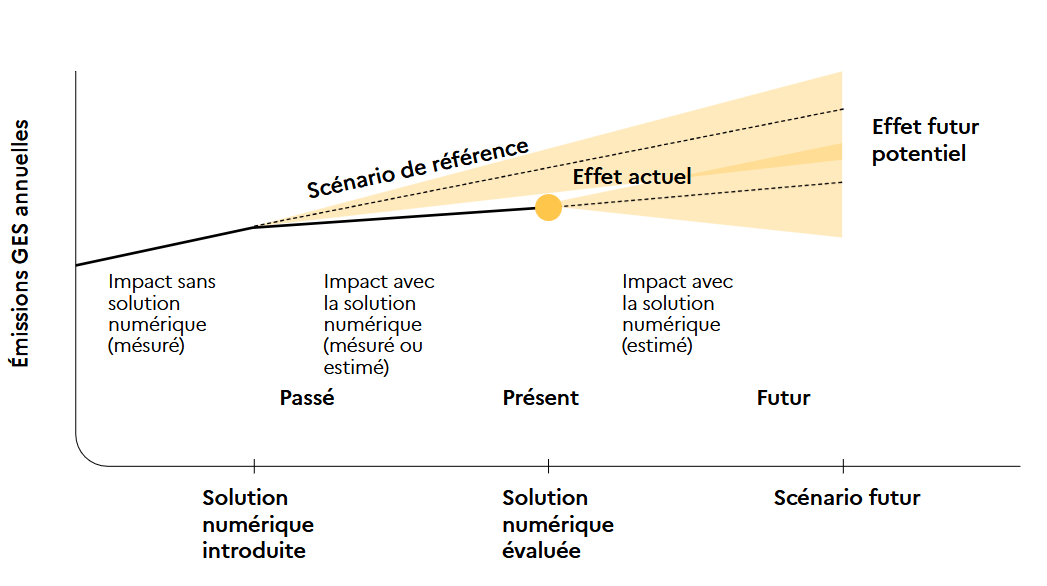
Various categories of reference scenario can be selected. We illustrate these with the example of replacing an oil-fired boiler with a connected heat pump.
- The “status quo” scenario : Oil-fired boiler
- The “market average” scenario : Average heating solution on the market
- The “regulation” scenario : Minimum solution required by regulations at the time of replacement
- The “control sample” scenario : Chosen based on the results of the control sample
- The ‘alternative’ or “low-tech” scenario : Reduction in average temperature or reduction in heating surface area
Important
Select the most relevant reference scenario against which the effects of the solution will be measured.
4 - Identify the directs and indirects effects of the solution
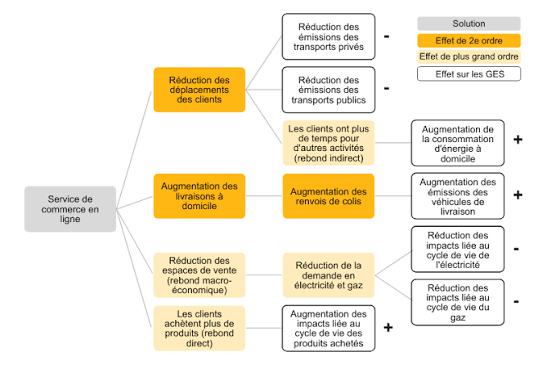
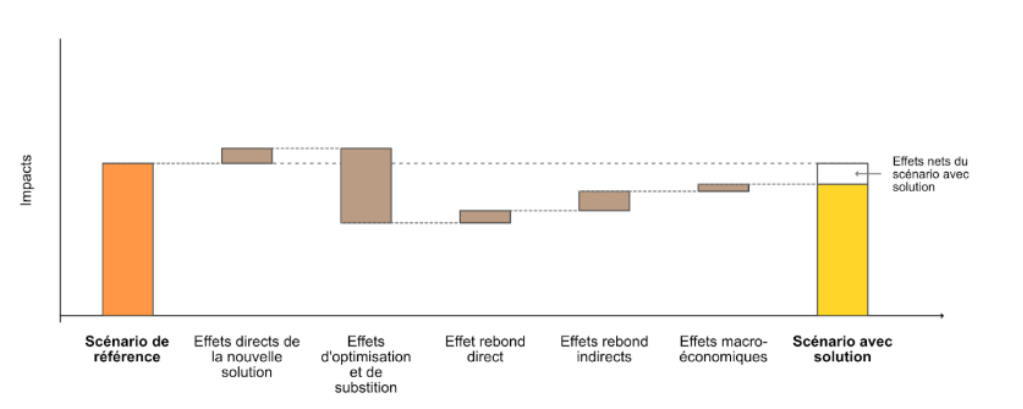
The most recent methodologies for assessing the net impact of digital technologies suggest using a consequence tree to map the effects of implementing a digital technology, from the most direct to the most indirect.
Important
Map the indirect effects of the solution using a consequence tree.
5 - Quantitatively assess the environmental impact of these effects
The final part is often the most difficult and subject to the most uncertainty. It involves assessing quantitatively the environmental impacts of each identified effect, whether positive or negative, and then summarising all impacts to yield the net impacts of the solution.
Important
Quantitative assessments of indirect effects are beyond the scope of this course.