Case study: Silicon Valley 80’ - Original Sin
Tip
This case study is based on the paper “From Clean Rooms to Dirty Water” by Christophe Lécuyer.
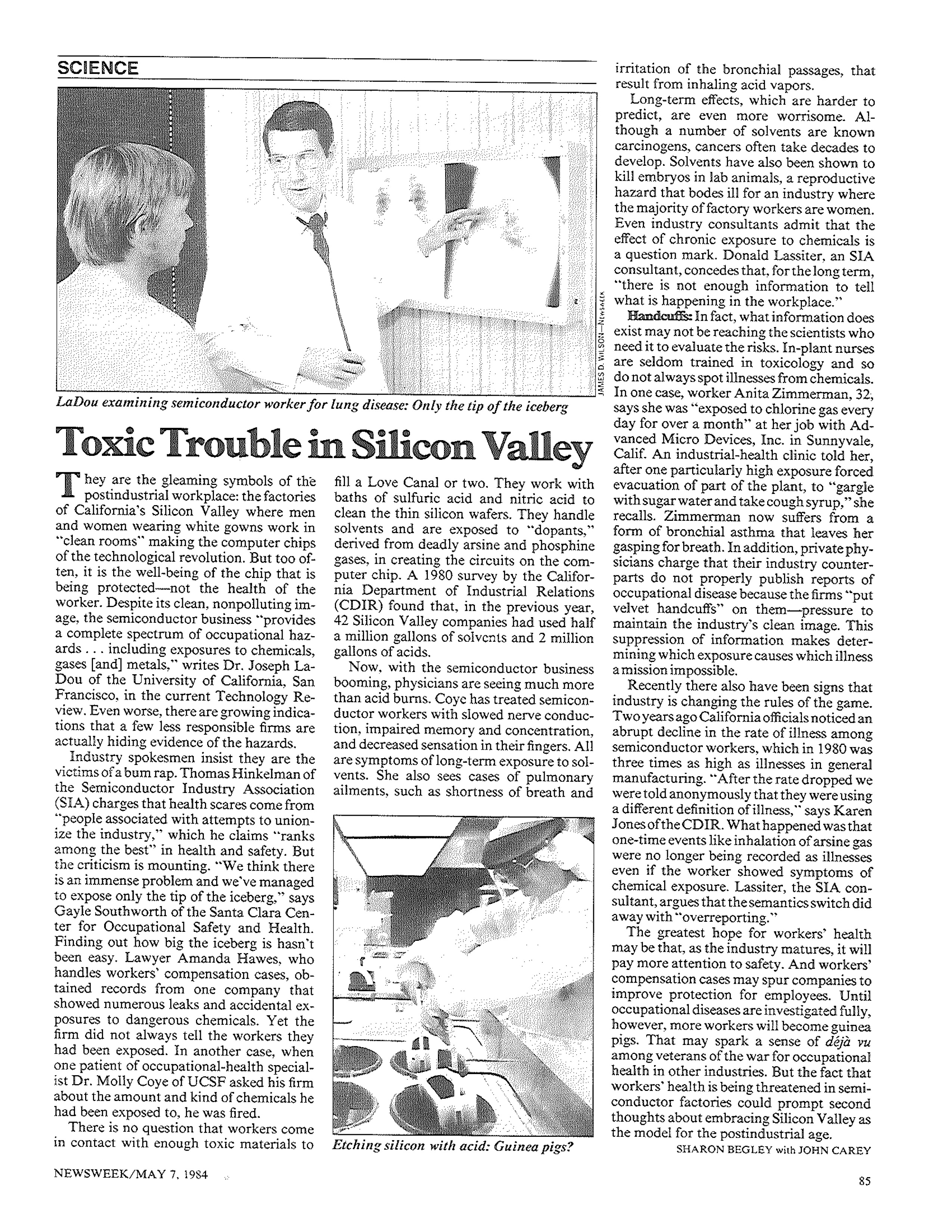
Silicon Valley was fertile ground for a major environmental and occupational health controversy in the late 1970s and 1980s. It had a very large industry that had contaminated many aquifers and severely affected the health of thousands of workers. But it is very likely that the full extent of pollution and workplace hazards would never have been known and addressed had it not been for the drive, courage, and tenacity of a group of young women: Amanda Hawes, Patricia Lamborn, and Robin Baker of SCCOSH; Marta Rojas, Cathi Hee, and Cathy Bauerle of Signetics; Susan Yoachum of the San Jose Mercury News; and Lorraine Ross and her San Jose neighbors. […] Without them, the Valley might have remained the “clean” and “safe” place it used to be in the 1960s and 1970s. (Christophe Lécuyer, p.326)
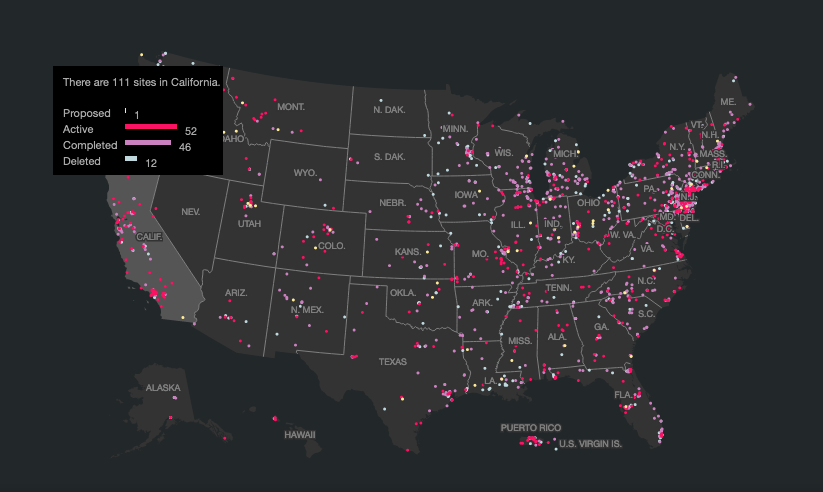
The Silicon Valley shows an interesting paradox on the matter. It is one of the birthplace of innovation and modern technologies, especially semiconductors, it is also one of the regions with the most Superfund sites, i.e. the most polluted locations, in the nation. The myth of the immateriality was conceived mostly by people that gravitated around this area, so how come they did not see these polluting activites that were providing them chips and computers?
The growing number of polluted sites came as a major surprise to engineers and managers working in the semiconductor industry. “I was shocked,” an AMD engineer later recalled. “Everybody was. We had all considered the chip industry to be super-clean, all being proved by our smokeless chimneys, clean green lawns, and nice-looking buildings. The leaking solvents problem surprised everyone in the Valley.” (Christophe Lécuyer, p.322)
The environmental movement in the Silicon Valley is quite unsual because it was spearheaded by labor activits, according to Christophe Lécuyer. They attacked microelectronics companies on their poor safety records to unionize the industry. While their unionizing effort failed, they led to the discovery of large-scale water pollution due to leaking underground tanks. Companies were forced to improve safety but scandals kept coming (in Los Paseos, miscarriages and birth defects were three times higher than in the whole California). This situation deeply modified the credibility of microelectronics firms and led to the creation of the EPA’s superfund program. Today, a large part of the semiconductor manufacturing is outsourced in Asia, especially in Japan, South Korea, Taiwan and China so these environmental issues have almost disapparead in California. (See interactive map of U.S. superfund sites here and here)
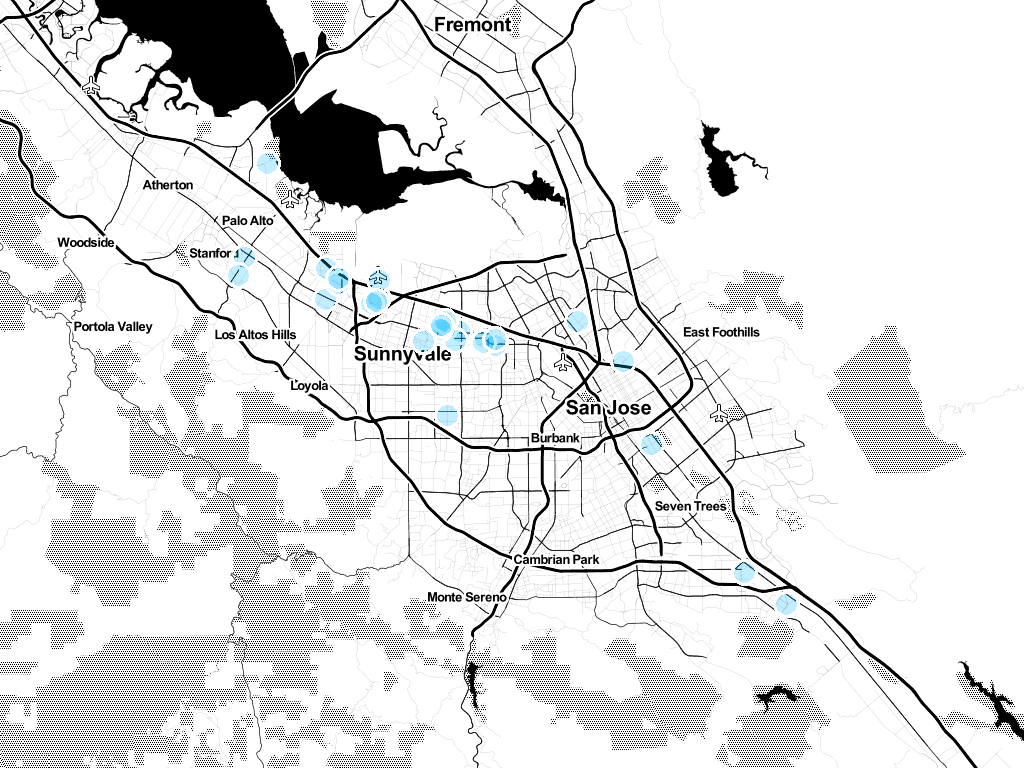
The environmental movement in the Silicon Valley was mainly led by the left wing of the labor movement (confrontational, antimanagement, anticapitalist, and prounion). However, corporations told a very different story than the grassroot labor movement and shaped the imaginaries around the Silicon Valley and its industry. We can only assume that thinkers from the Valley couldn’t (or decided not to) see the environemental damage unfolding down south and rather follow the storyline displayed by the semiconductor manufacturing industry.
The history of antitoxics organizing in Silicon Valley is full of paradoxes. It started with a campaign to unionize the microelectronics industry and ended up initiating a massive, federally mandated environmental remediation program. Labor activists turned into environmentalists, and the organization that drove the movement splintered as it obtained its greatest success. Social activism is full of uncertainty indeed. (Christophe Lécuyer, p.327)