Session 8 : End-of-life
Given the current knowledge and data on digital infrastructures, research primarily focuses on the upstream phase and usage rather than the end of life. Furthermore, the environmental impacts of greenhouse gases, energy, water and metal consumption are better understood than the impacts of chemicals and ecosystem degradation, which are precisely the issues relevant for end-of-life. Although relatively little data is available on these other environmental and health impacts, addressing them is necessary in order to fully appreciate the extent of what remains to be explored regarding the footprint of digital infrastructure.
The end of life for ICT equipment generally means that it is transformed into ‘waste’, i.e. it is no longer usable or recoverable according to the manufacturer’s and the country’s standards. Digital equipment falls into the category of waste electrical and electronic equipment (WEEE). This includes heat exchange equipment such as fridges, freezers and air conditioners; screens such as TVs, laptops and tablets; lamps; large equipment such as washing machines, tumble dryers and dishwashers; small equipment such as hoovers, microwave ovens and toasters; and small IT and telecommunications equipment such as mobile phones, GPS devices, calculators, printers, telephones, routers and smartphones. Therefore, waste from digital equipment is mainly in the form of screens and small IT and telecommunications equipment.
Of the 62 Mt of WEEE generated worldwide in 2022, 5.9 Mt came from monitors, tablets, laptops and televisions, and 4.9 Mt came from small IT and telecommunications equipment. Between 2019 and 2022, the generation of waste in these two categories has slighlty evolved in two different direction: the annual generation of waste from screens, tablets, computers and televisions decreased by 12% compared to 2019, while that of small IT equipment increased by 4% for the same period. However, these values do not evolve in the same way between the different regions of the world. Europe produces the highest weight of e-waste per capita, far ahead of Africa and Asia, although the latter produces a large volume of waste, notably due to its larger population. However, Europe is the region with the highest e-waste collection rate thanks to relatively effective national and European policies. Globally, out of 62Mt Mt of e-waste, 48.2 Mt is undocumented and usually ends up buried, traded or recycled outside existing environmental standards. However, the value of recoverable raw materials remains very high. Tthe metals contained in the 62 million tonnes of e-waste generated worldwide in 2022 (including iron, copper and aluminium) are estimated to be worth approximately US$91 billion.
Given the phenomenal flow of E-waste being produced and untracked each year, significant pollution is occurring in the countries where this waste is stored and buried. It is estimated that 50 tonnes of mercury escape from landfilled e-waste every year, as well as 71 kt of flame retardant plastics (FRP), which are extremely toxic to the living environment and to the people exposed to them. Informal landfills and recycling sites therefore present significant health and environmental risks. Toxic substances leaking from the oxidation of electronic components pollute soils and waterways, affecting animals, plantations and fish that will be consumed by the surrounding communities. Informal recyclers risk breathing toxic fumes from burning wires and circuit boards. These workers unintentionally put themselves at greater risk of injury as well as genetic damage, blood glucose imbalances, effects on liver function, and fertility disorders.
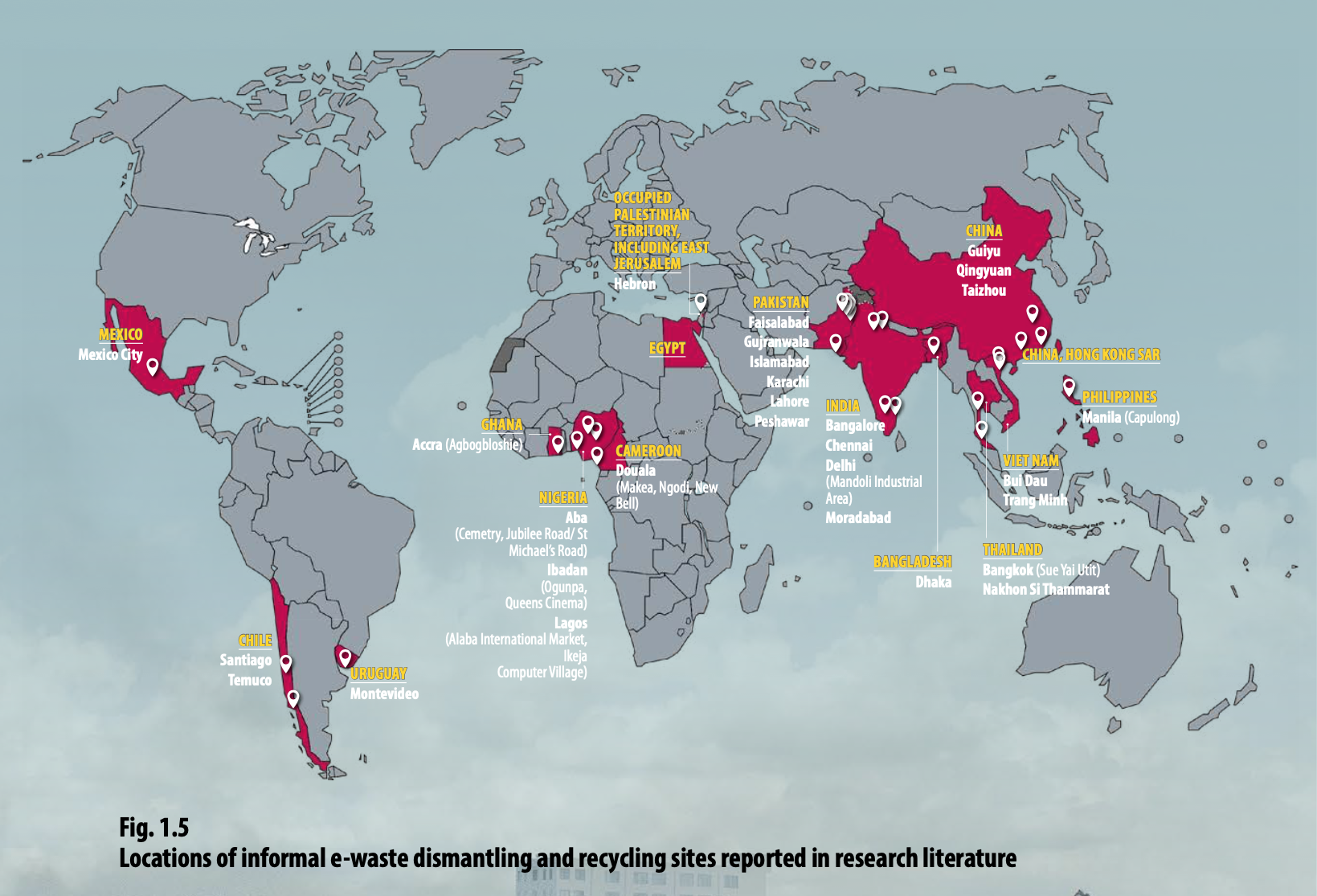
One solution often put forward to address the environmental challenges of the digital value chain is better end-of-life management through repairing, refurbishing or recycling. However, there are many challenges throughout the end-of-life process that make it difficult, and sometimes impossible, to implement these practices on a large scale.
Obsolescence
Digital equipment have a particularly short lifespan wich puts pressure on the ICT industry’s downstream value chain. This is partially due to several types of obsolescence.

Repair/Refurbish
In order to extend the lifespan of digital equipment, repairing and refurbishing practices are essential. However, these activities, even if beneficial from an environmental point of view, have their own impacts.
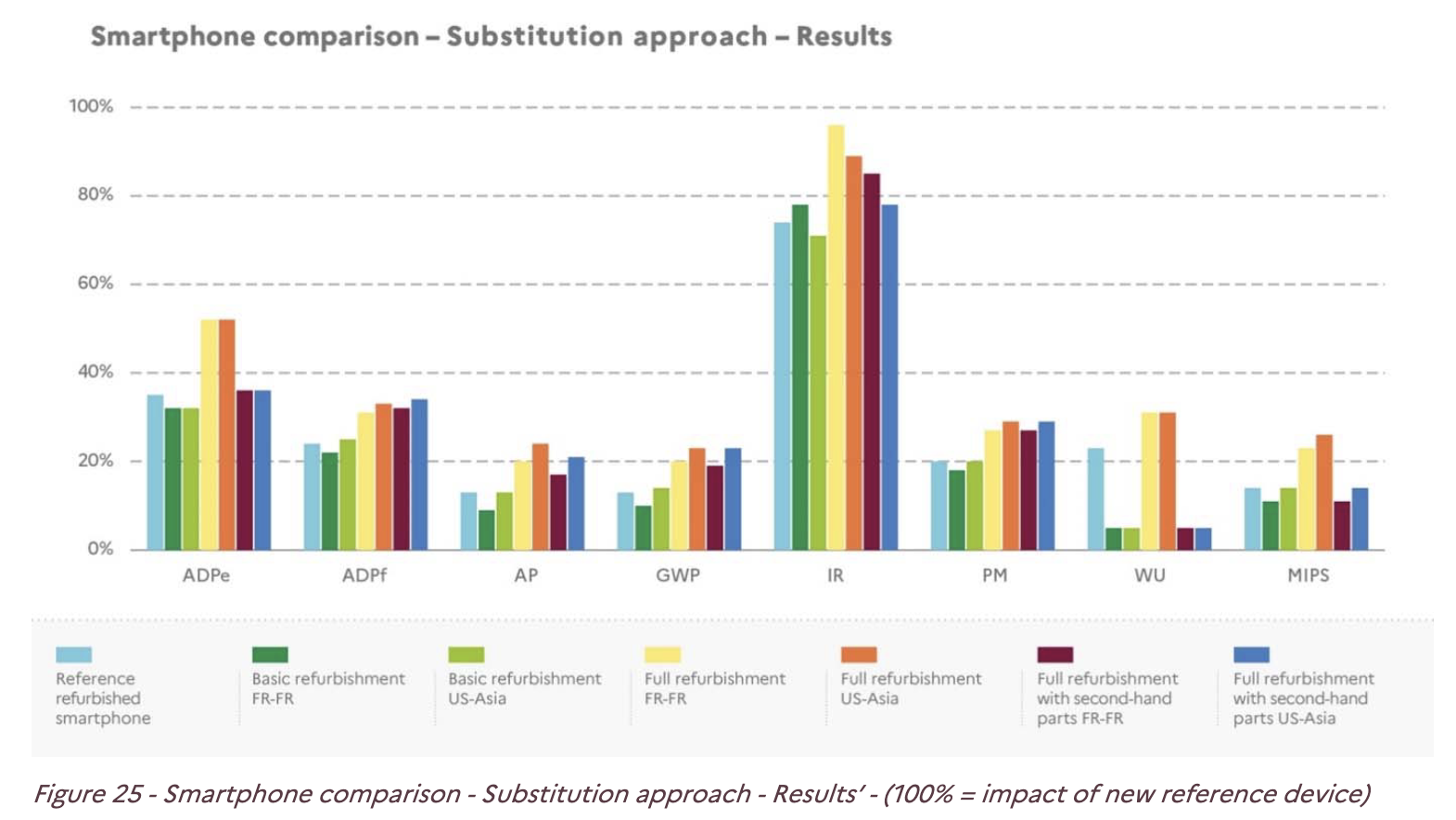
In addition, these practices depend on the availability of parts, which in turn depends on manufacturer policy. Furthermore, given that many manufacturers release a wide range of products at high deployment rates, it is difficult to industrialise repair and refurbishment practices, which often limits their large-scale implementation. The sector is also very heterogeneous, with small social economy actors competing with multinationals. Competition for deposits and industrialisation is becoming increasingly difficult for smaller players.
Recycle
In the face of constant increases in material consumption, recycling electronic waste seems to be a promising option. In Europe, recycling is promoted as a means of addressing environmental and sovereignty issues, but its effectiveness depends heavily on the type of metals involved. With the exception of structural metals such as aluminium and copper, metals used in digital technology are rarely recycled.
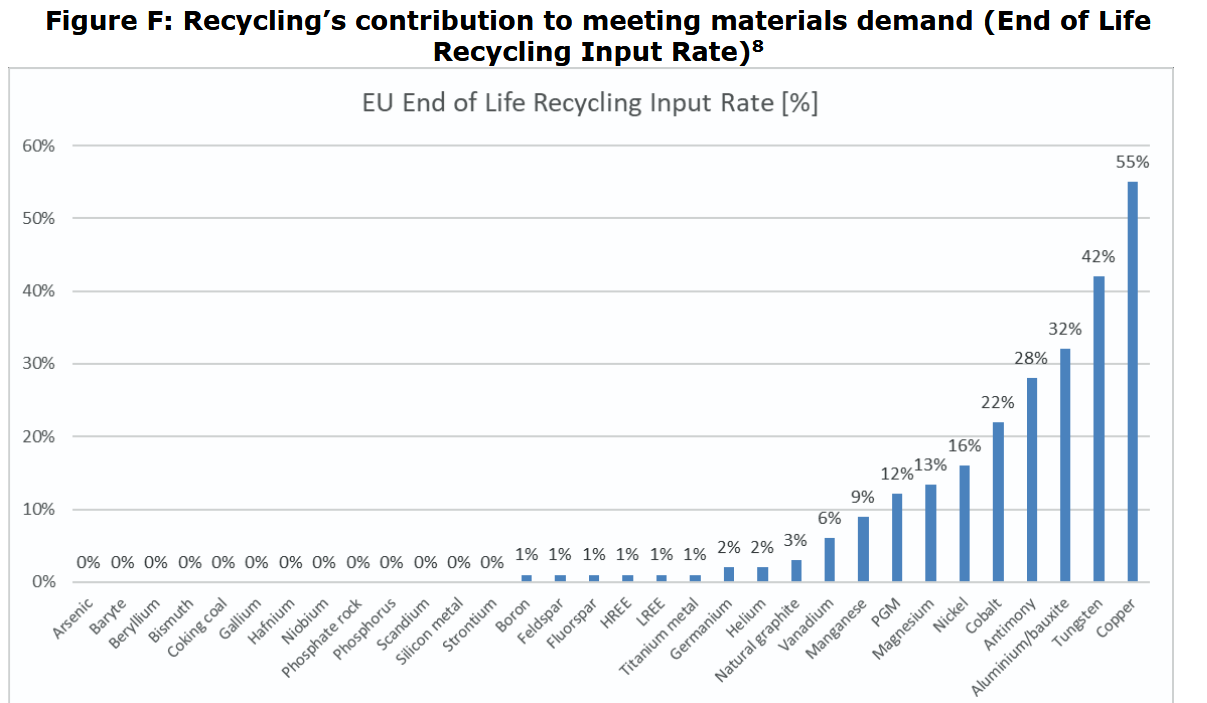
Indeed, it is difficult to recover and recycle the metals present in digital equipment because they are present in such small quantities, or because they are used in an alloy that cannot be separated.
In addition to these technical constraints, there are also economic ones. Recycling industries have to invest much more than other industries to recover metals. Florian Fizaine cites the example of the UMICORE company: One billion dollars has been invested in the company’s recycling and refining plant in Belgium. This plant extracts 30 tonnes of gold, 37 tonnes of platinum group metals, 1,000 tonnes of silver, and 68,500 tonnes of other metals per year from scrap. This makes it the third largest gold mine in the world […] By comparison, a paper recycling plant only requires an investment of 30 to 50 million dollars“ (France Stratégie).
Without collection and treatment, electronic waste is generally sent through informal or illegal channels to countries in Africa, South America or South East Asia. The metals and materials they contain are then extracted in conditions that are dangerous for human health and ecosystems. Today, it is estimated that 80% of electronic waste goes through informal channels.
If illegal disposal is subject to important social and environnmental dommages, legal pathways are also subject to environnmental controveries.
Important
Related case study : Umicore’s Hoboken site
Without collection and treatment, electronic waste is generally sent through informal or illegal channels to countries in Africa, South America or South East Asia. The metals and materials they contain are then extracted in conditions that are dangerous for human health and ecosystems. Today, it is estimated that 80% of electronic waste goes through informal channels.
The limits of recycling in the context of growth.

The increased use of digital technologies in products not designed for resource recovery puts pressure on critical metals. The recovery of these metals through recycling is now extremely limited, except for a few high-value metals such as gold and platinum. Ultimately, recycling cannot be considered a viable solution for meeting increased demand.
Reference
- https://www.itu.int/en/ITU-D/Environment/Documents/Publications/2025/d-gen-e_waste.01-2024-pdf-f.pdf