Session 2 : Telecom infrastructures
What are digital infrastructures?
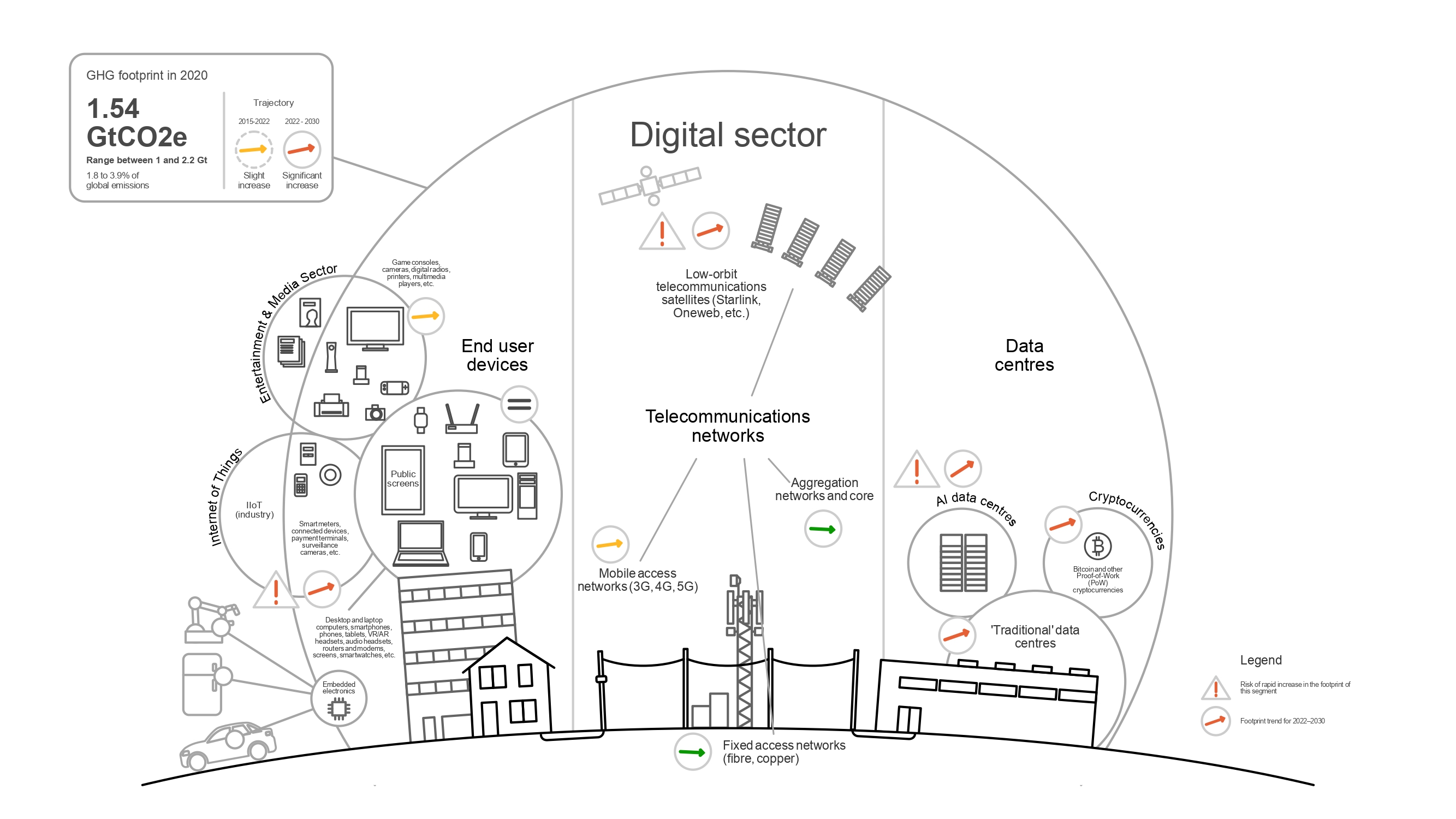
The transfer, computing and use of digital data require a series of interconnected infrastructures. Three types of systems are generally distinguished in environmental science applied to digitization: data centers, telecommunications networks, and user equipment. Understanding how these infrastructures work and their materiality is a prerequisite for environmental analysis.
Telecommunication networks
Important
Related activity : Telco treasure hunt
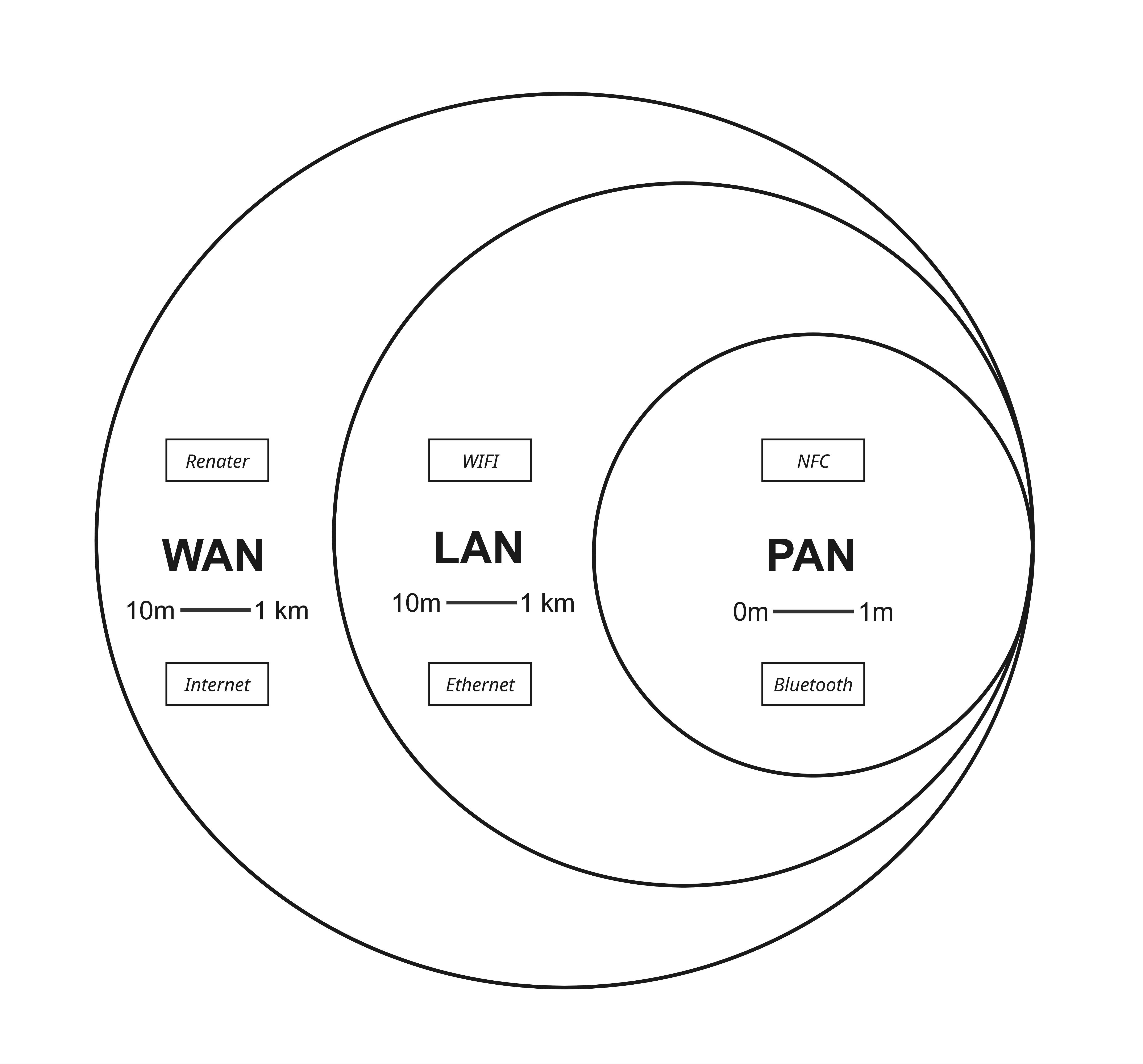
Telecommunications networks encompass a wide range of infrastructures and technologies. They are typically categorised according to the distance between the transmitter and receiver.
If we focus on internet connections, we can distinguish between fixed and radio access networks that connect fixed (computers, etc.) or mobile (smartphones, cars, etc.) digital equipment. These networks send generally data to aggregation and core networks who will route the transferred data to its destination. Each telecom operator has its own autonomous network that interconnects with private networks of companies, states, and various organizations. This interconnection between autonomous networks is ensured by what is called the “internet protocol” (IP).
Fixed access network
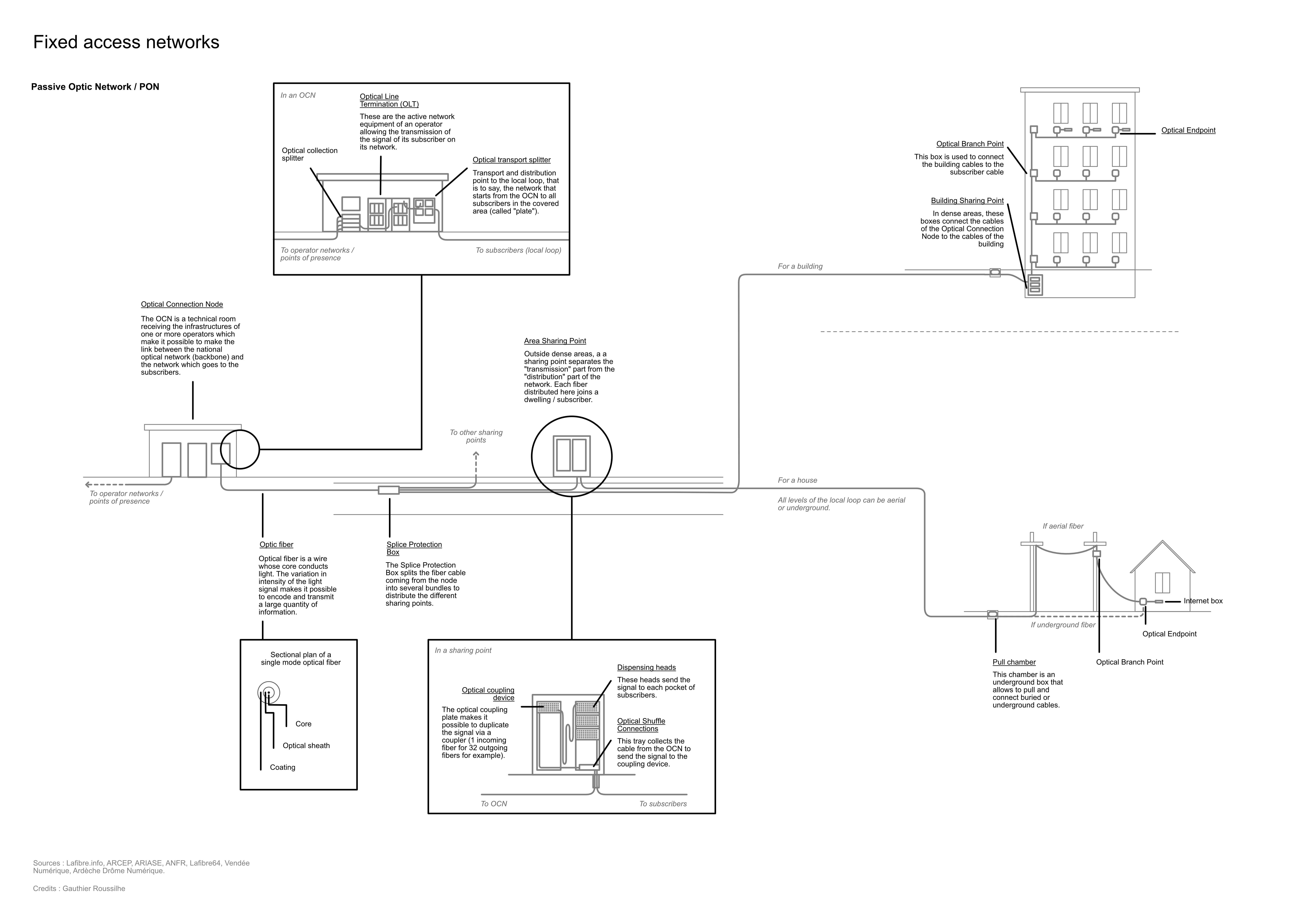
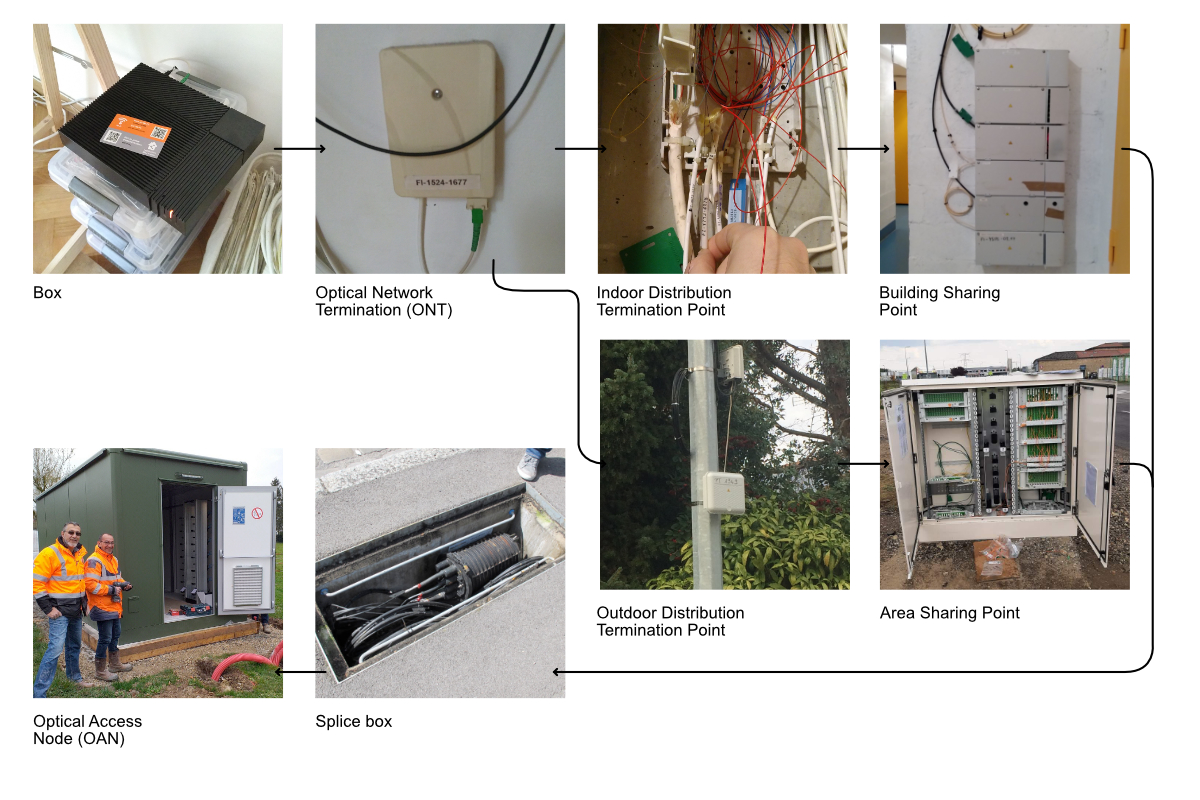
Fixed networks include copper networks, historically used by the telephone, and fiber networks, which are now being massively deployed in post-industrial countries. A customer connected to the fiber network has a box of his operator which is connected to the line opened by the latter. The fiber link will pass through a multitude of small equipments before arriving in the operator’s data center for processing.
Mobile access network
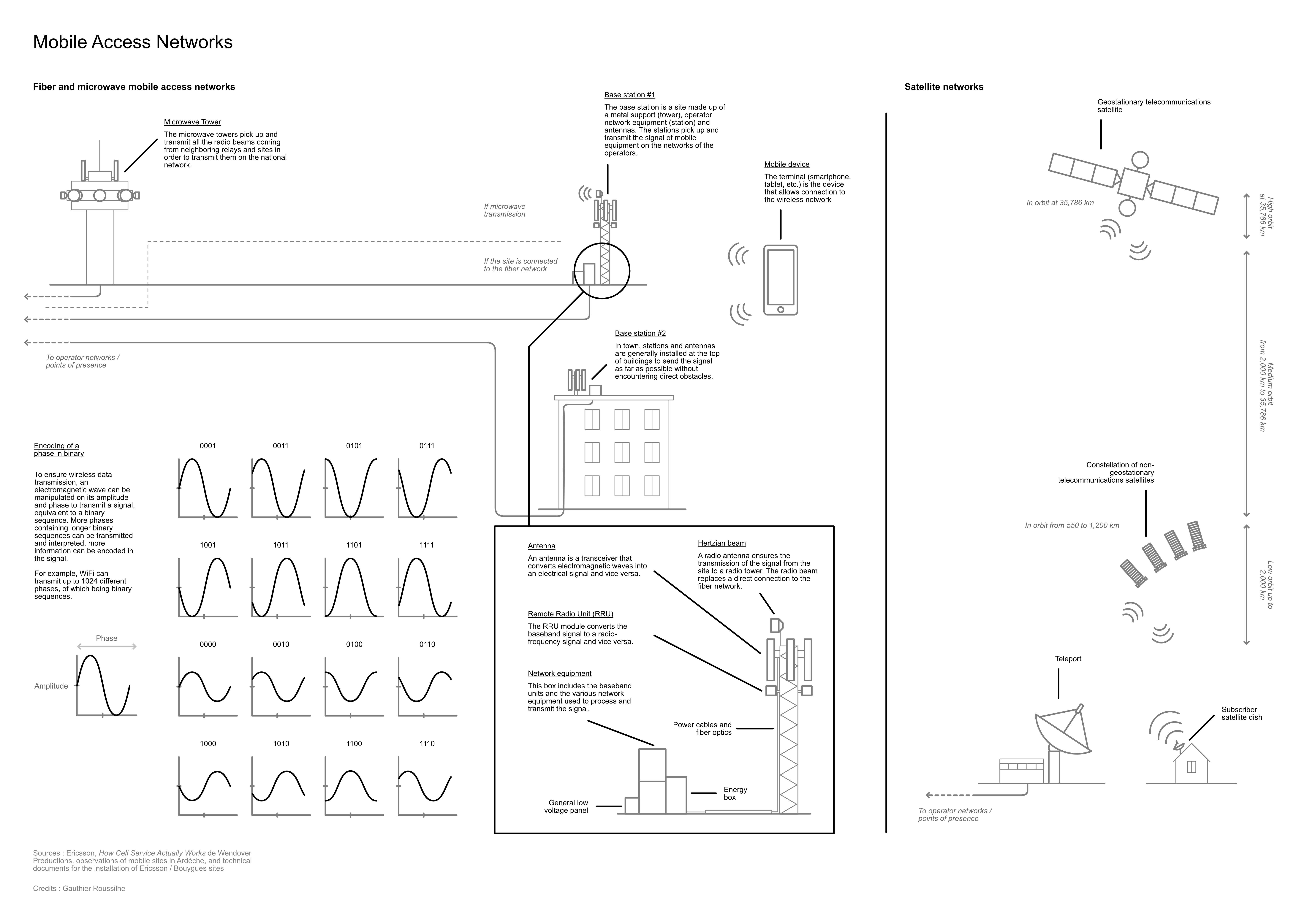
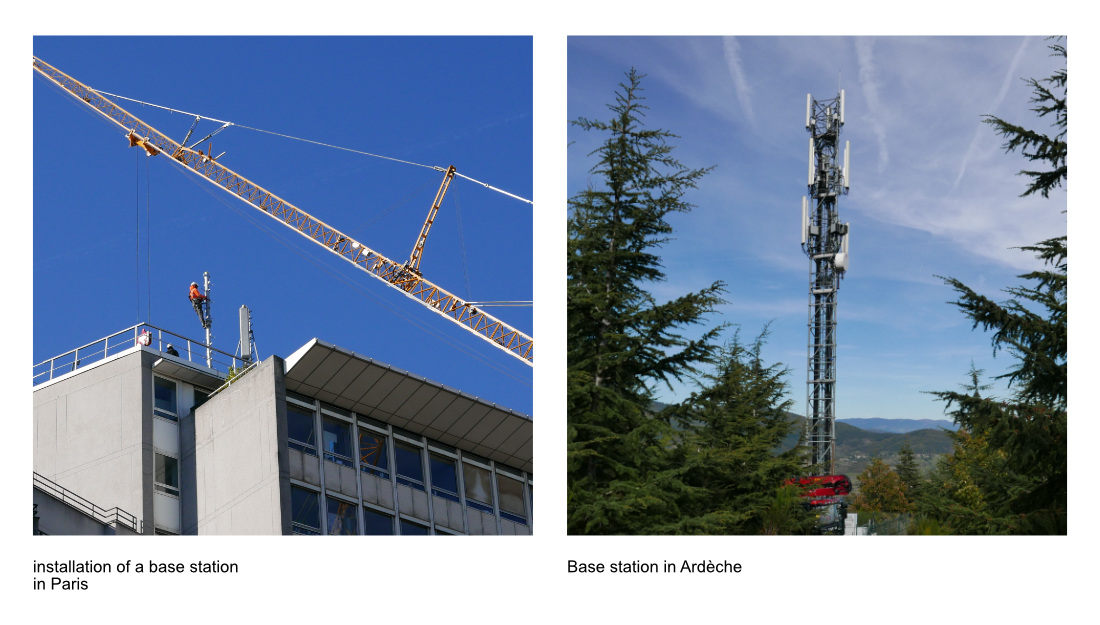
Mobile networks include 2G/3G/4G/5G stations as well as satellite solutions. A mobile device such as a smartphone maintains a permanent connection with the nearest station in order to transmit data over the operator’s network and the internet. Mobile coverage depends on the number of stations deployed on the territory. Urban areas are more easily covered and can reach many users. On the other hand, rural areas are more difficult to cover due to the low financial incentives and more complex geographies.
Aggregation and core network
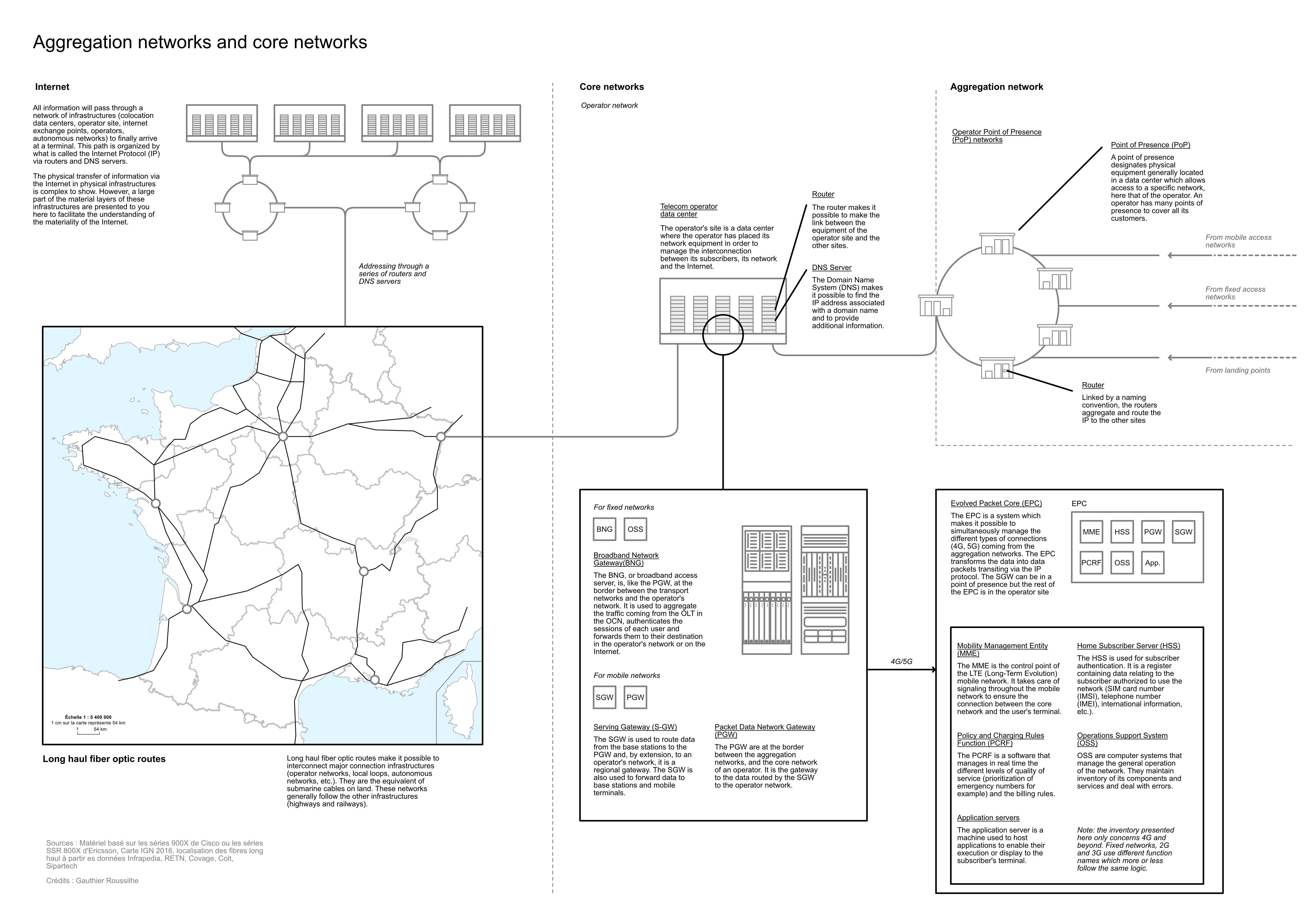
Connections coming from the fixed and mobile networks then circulate on the aggregation networks until they arrive on the core network of the operator. It is usually at this point that the incoming connection is processed and rerouted to the requested destination through internet protocol. Long-haul fiber networks cover the national territory and continue into other bordering countries.
The telecommunication networks are rarely put forward yet it is a keystone of the data transfer but also the most fragile part. Most post-industrial countries are launching major projects to deploy fiber networks throughout their territory with varying degrees of success. Likewise, new generations of communication protocols are being implemented such as 5G and 6G and new services are entering the market like Starlink. The evolution of digital services as we know them is linked to the evolution of networks, which is why it is particularly important to understand what it means to deploy and maintain them.
Important
Related activity : Tracing the road to google.com
Deploying and maintaining networks in France
Deploying networks requires a great deal of civil engineering effort to integrate them into the existing infrastructure or to build new routes. It is a long job that requires many people on the ground. In many respects, the deployment of fiber in France is the largest infrastructure project on the national territory since the deployment of telephone and electricity networks.
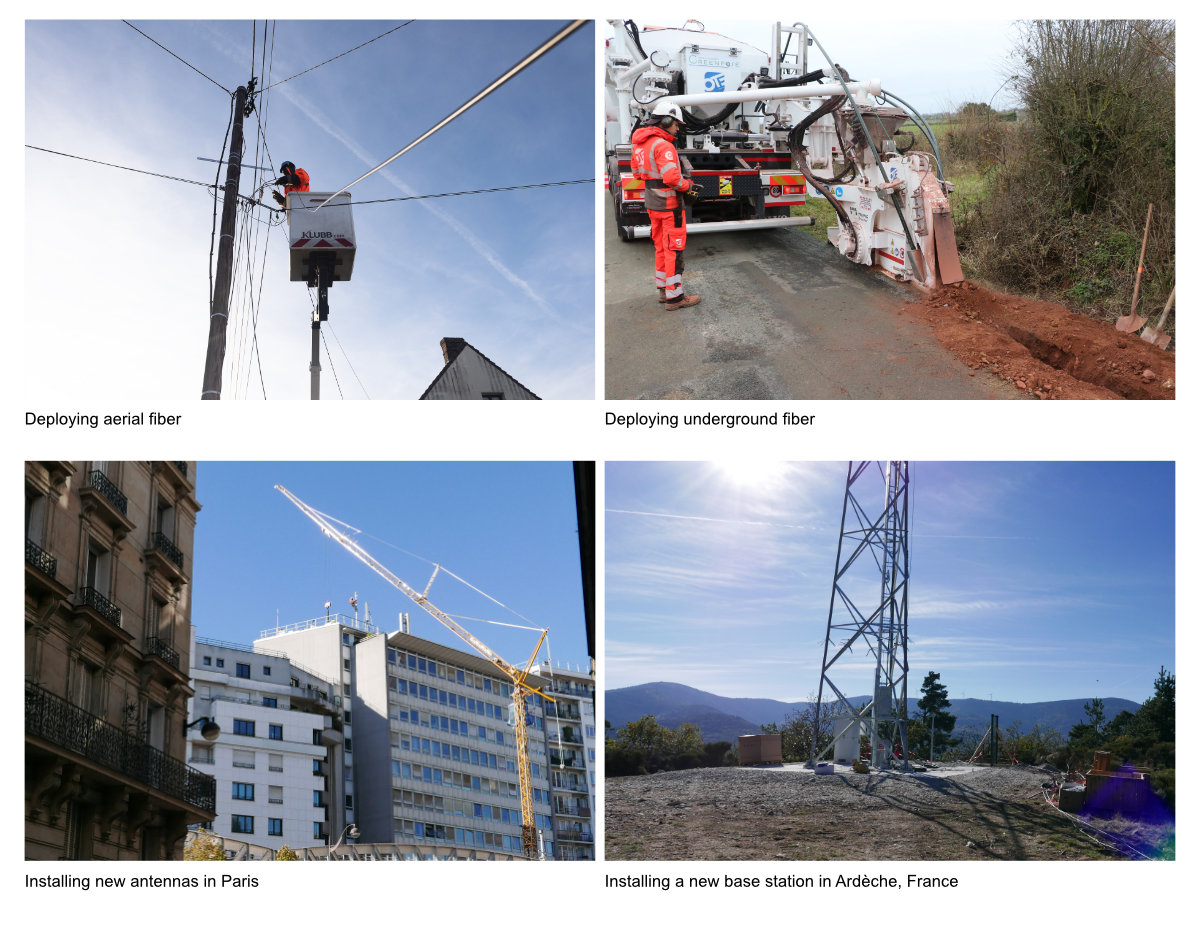
Deploying fiber with a FttH (Fiber-to-the-Home) model, which means one fiber distribution termination point (DTP) per home, is very expensive. For example, in the most expensive areas, rural areas, the deployment of fiber in Ardèche and Drôme will cost 597 million euros to install 311,000 DTP. As these areas are not profitable for private operators, it is usually the public institutions (state, region, department, etc.) that pay for the deployment and lease it to a private operator. Even with this massive deployment, 3% of homes are not connectable by fiber and are instead eligible for mobile or satellite offers. This example puts into perspective the idea that all countries on Earth could be connected directly to fiber networks. This requires enormous capital that is generally out of reach for many countries in the Global South. Access to cellular or satellite networks may then be a better option, but this affects the equality of connection access and the nature of the digital services that can be used.
Important
Related case study : Deploying fiber network in rural France
However, like any infrastructure it requires care and vigilant maintenance. Without the tens of thousands of technicians who maintain networks every day, we can assume that our Internet access would not last long. Sometimes the equipment is damaged by accident and/or because its location puts it in danger (because it depends on the constraints of other networks). In countries like France, the deployment and maintenance of fiber networks is particularly difficult because large telecom operators use many levels of subcontractors, sometimes poorly trained or with untenable objectives, with a very patchy access to information. For example, a technician may unplug a subscriber from a fiber outlet to connect his own customer.
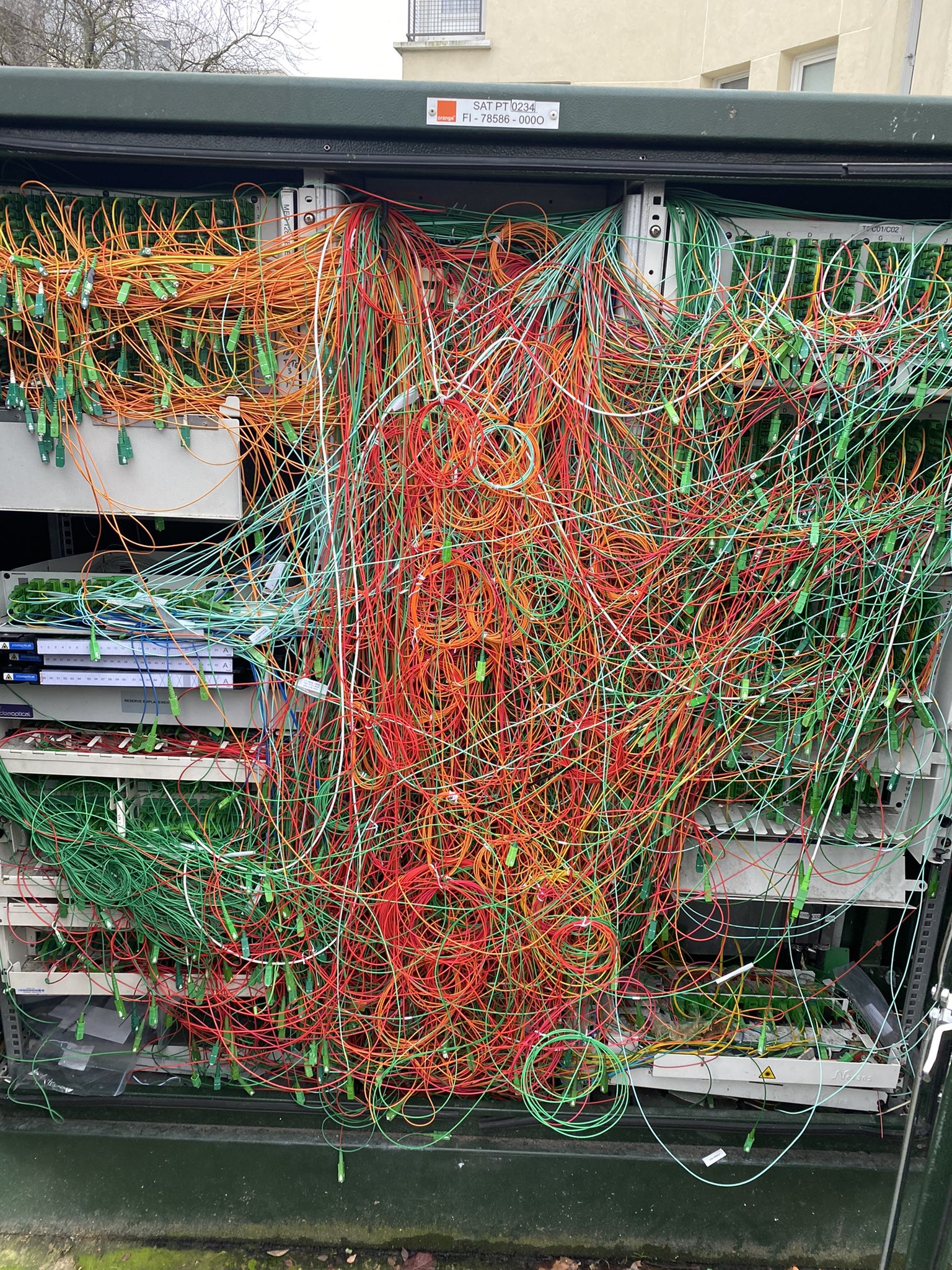
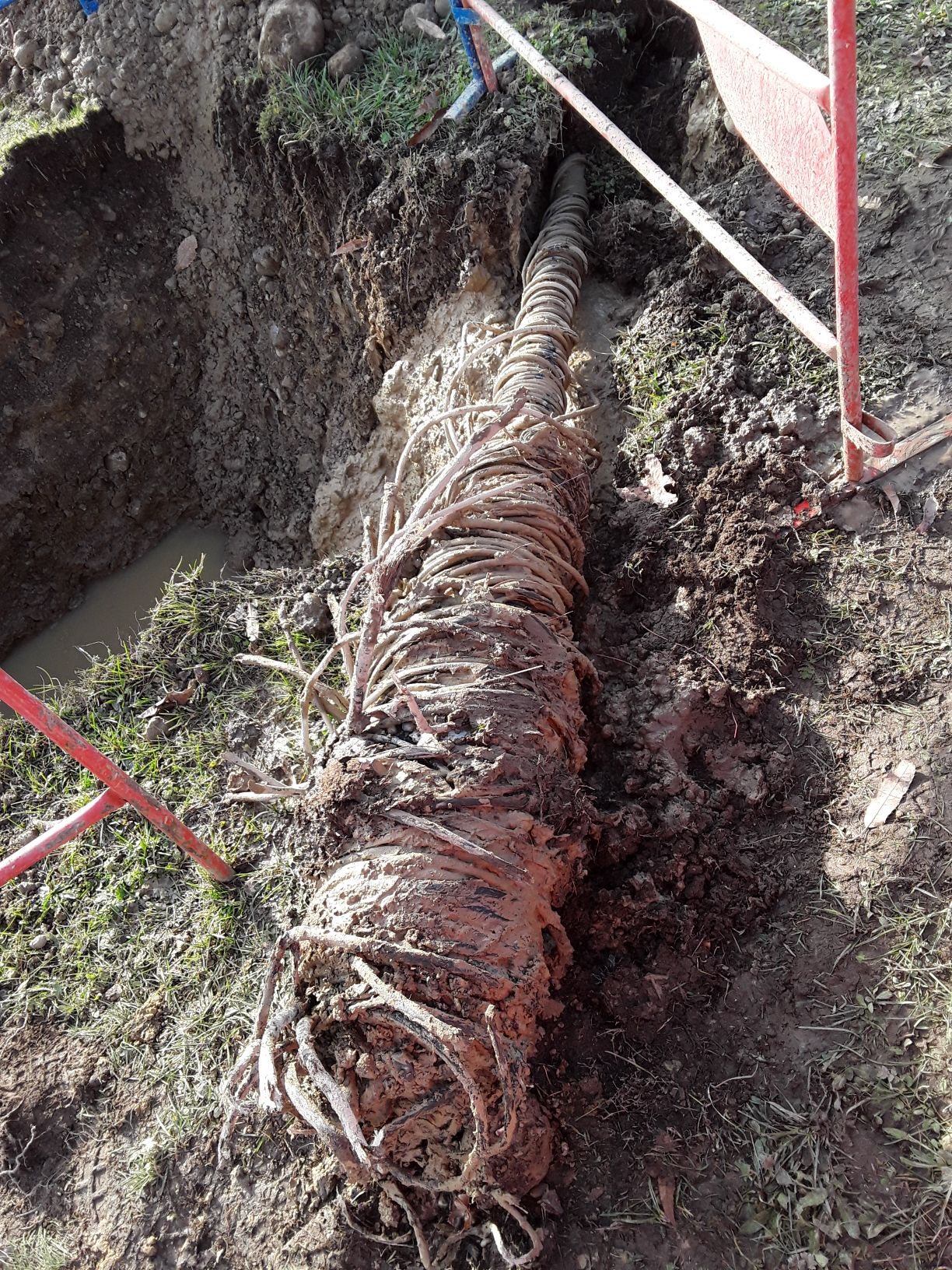
Acts of malice on the network are also significant, even if their origins are difficult to trace. A large number of incidents seem to be caused by unpaid subcontractors or conflicts between different subcontractors. Malicious acts may also be committed for political or ideological reasons (see: all disruptions on French telecom networks in 2021). However, these acts are a minority compared with the biggest source of network damage and breakdowns: civil engineering. Crews often don’t know exactly where the cables and pipes are in the ground when they are digging, so they pull them out or damage them. Accidents of this kind can happen almost daily on a national network. For example, in Frankfurt in February 2023, while digging at a depth of 5 metres, workers hit a critical cable on the network on which Lufthansa’s IT system depends. As a result, Lufthansa’s flights were cancelled for almost a day (See Deutsche Telekom’s post and Lufthansa’s post). On 25 July 2023, during work on a new tram line in Brest, France, site crews ripped out a cable, causing 15,000 subscribers to be cut off from the internet for a week.
Deploying submarine cables worldwide
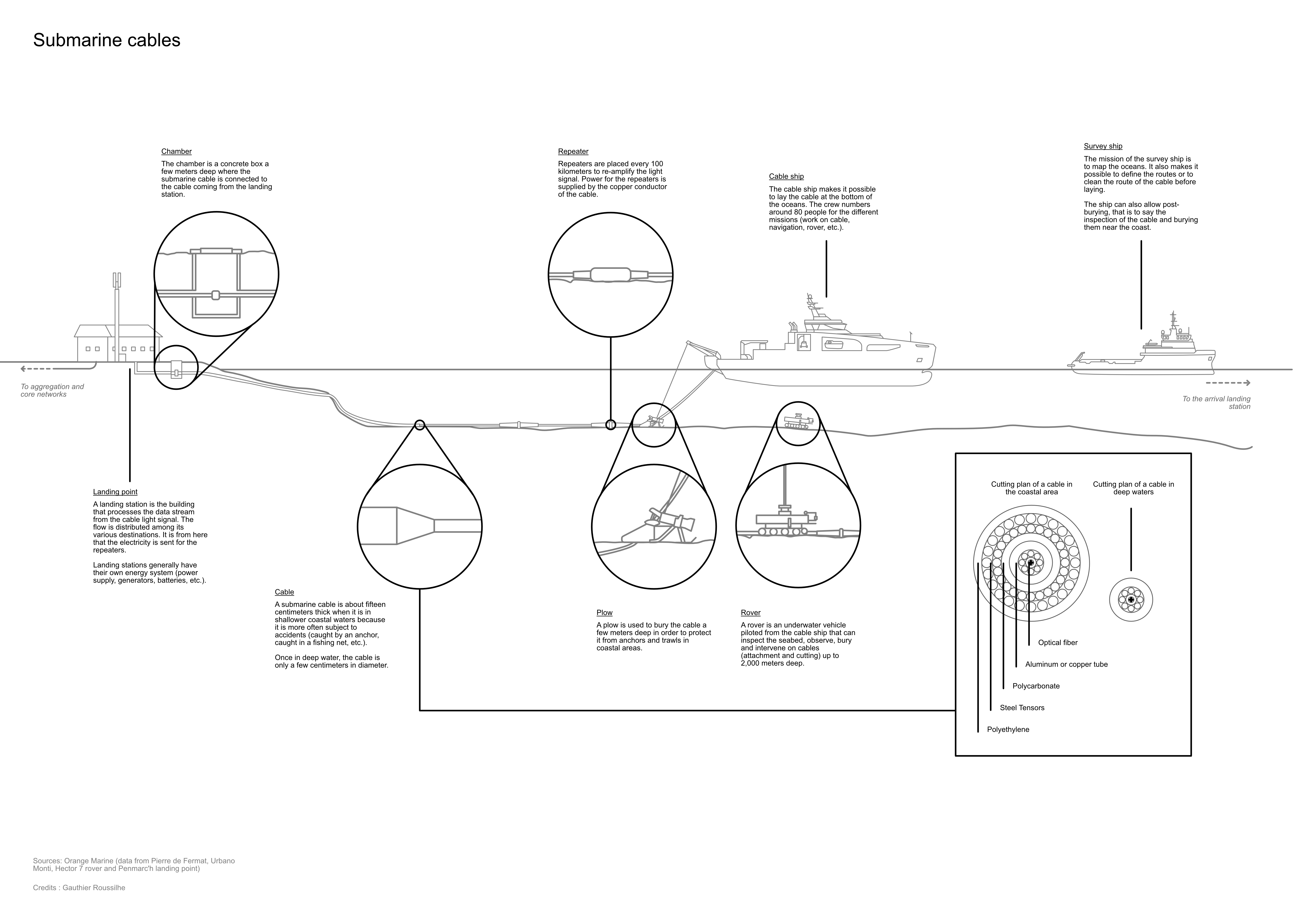
To ensure intercontinental and inter-oceanic links, submarine cables have been massively deployed. These are laid in the seabed by specialized ships. The cables are connected to the terrestrial network in coastal facilities called “landing points”. According to TeleGeography: “as of late 2021, there are approximately 436 submarine cables in service around the world […] and over 1.3 million kilometers of submarine cables in service.” (4 times the distance between the earth and the moon). On average, the lifespan of a submarine cable is between 20 and 30 years, but it can be replaced earlier by more efficient and economically viable cables. Content providers (Facebook, Google, Amazon, Netflix, etc.) are the main customers of submarine cable installers as they are also the biggest consumers of bandwidth.
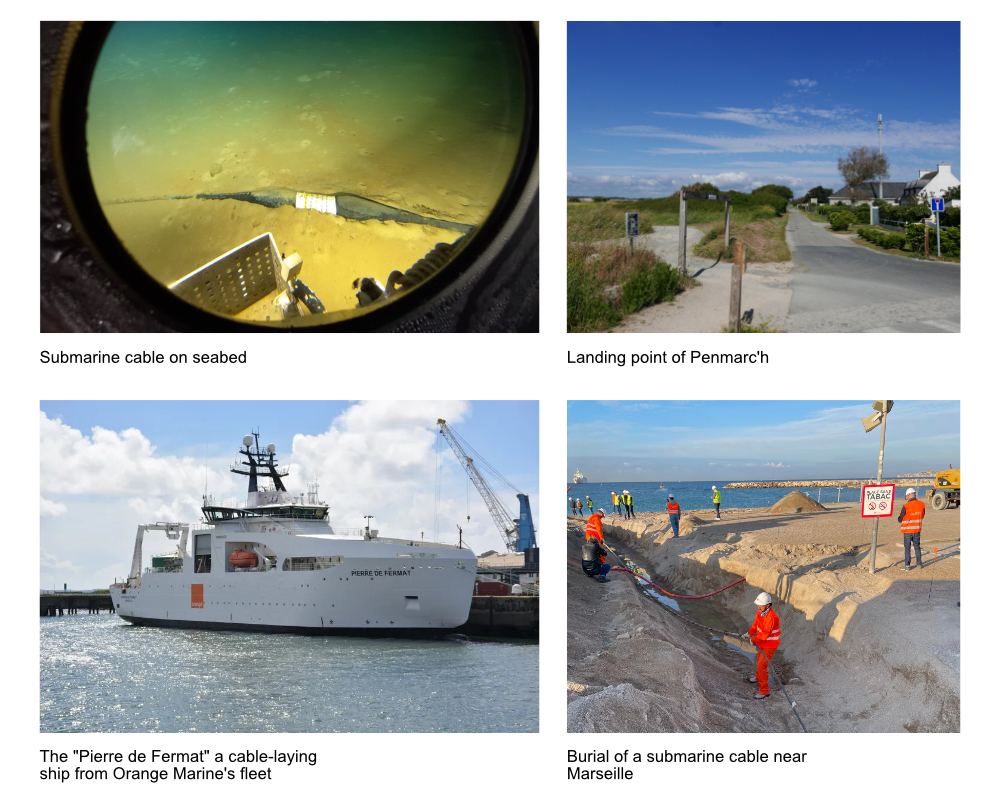
Most accidents on underwater cables are due to boat accidents, commonly the cable is caught in the nets of a fishing boat. Natural disasters can also affect cables (earthquake, volcanic eruption, underwater landslide, etc.). On average, there are over 100 cable faults each year.
Important
Related activity : Geopolitics of submarine cables
Resources
Syllabus
- Ingrid Burrington, Networks of New York – An Illustrated Field Guide to Urban Internet Infrastructure, Melville House, 2016
To go further
- Geoffrey C. Bowker et al., Toward Information Infrastructure Studies: Ways of Knowing in a Networked Environment, 2010
- Steven Li, How Does The Internet Work?, 2017
- Commotion Wireless, The Commotion Wireless Project - Commotion Construction Kit
- Barry M. Leiner et al., A brief history of Internet, ACM SIGCOMM Computer Communication Review 39, n.5, 2009
Video materials
- Wendover Productions, How Cell Service Actually Works
- AT&T Archives, Similiarities of Wave Behavior
- Royal Canadian Air Force, Antenna Fundamentals: Propagation