Session 3 : Data centers
They are different ways to store and compute data. Data centers differs in scale and services. Originally, companies would have their own server rooms in their headquarters, these rooms are called “on premise” (on prem). Telecom operators would have their own data centers that can also perform interconnection between different networks. Then, there are data center operators that offer to rent space, servers and virtual machines in their facilities, this kind of activity is called colocation. Finally, public cloud operators (Google Cloud Platform, Amazon Web Services, Alibaba, etc.) offer managed services to its clients with a consumption-based pricing, instead of renting space or machines the client only pays for what it consumes. Public cloud providers tend to develop large-scale data centers called “hyperscalers”. Organizations can also run their own private cloud on their servers (on premise) or on the servers they are renting in a colocation data center.
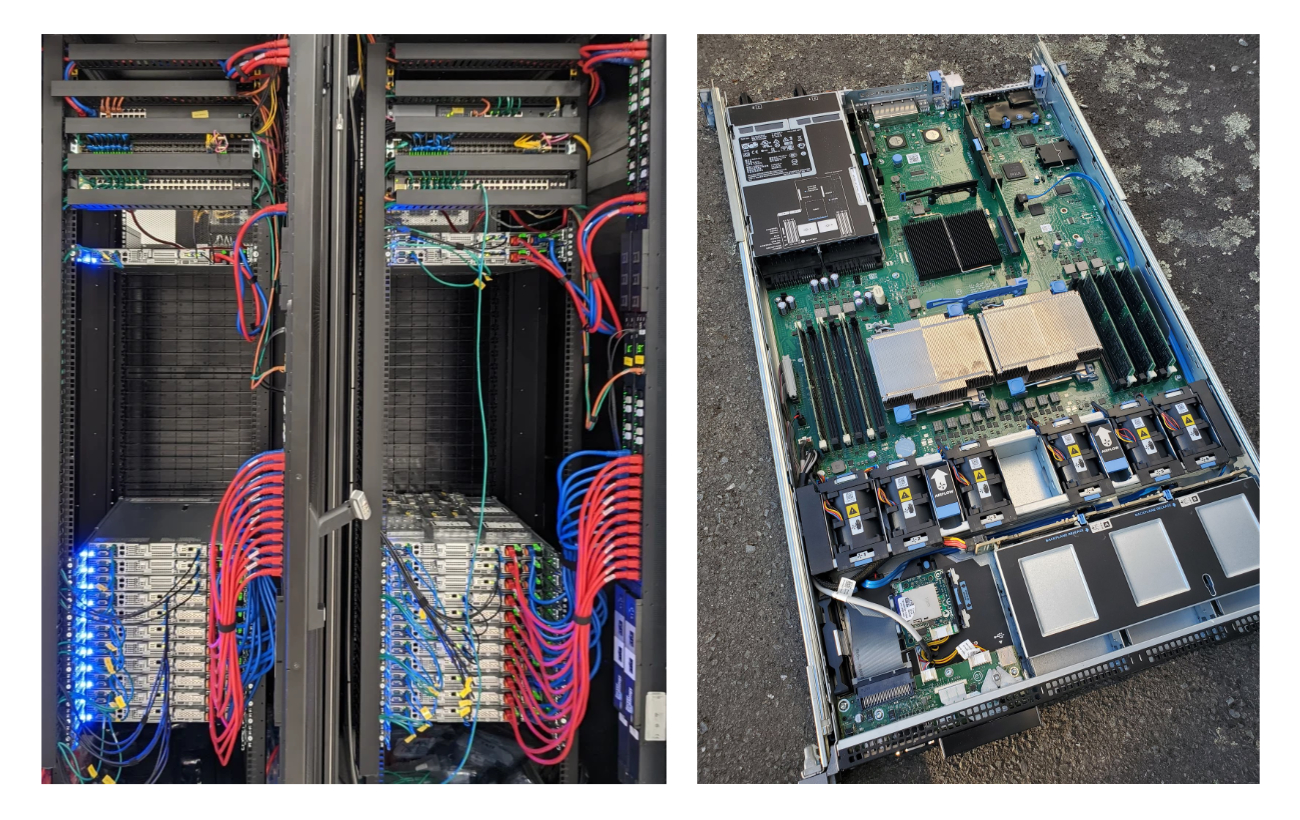
What is inside a datacenter ?
Let’s take a look at Brad Smith’s (Microsoft’s Chairman) tour of the company’s data centre in Quincy, Washington.
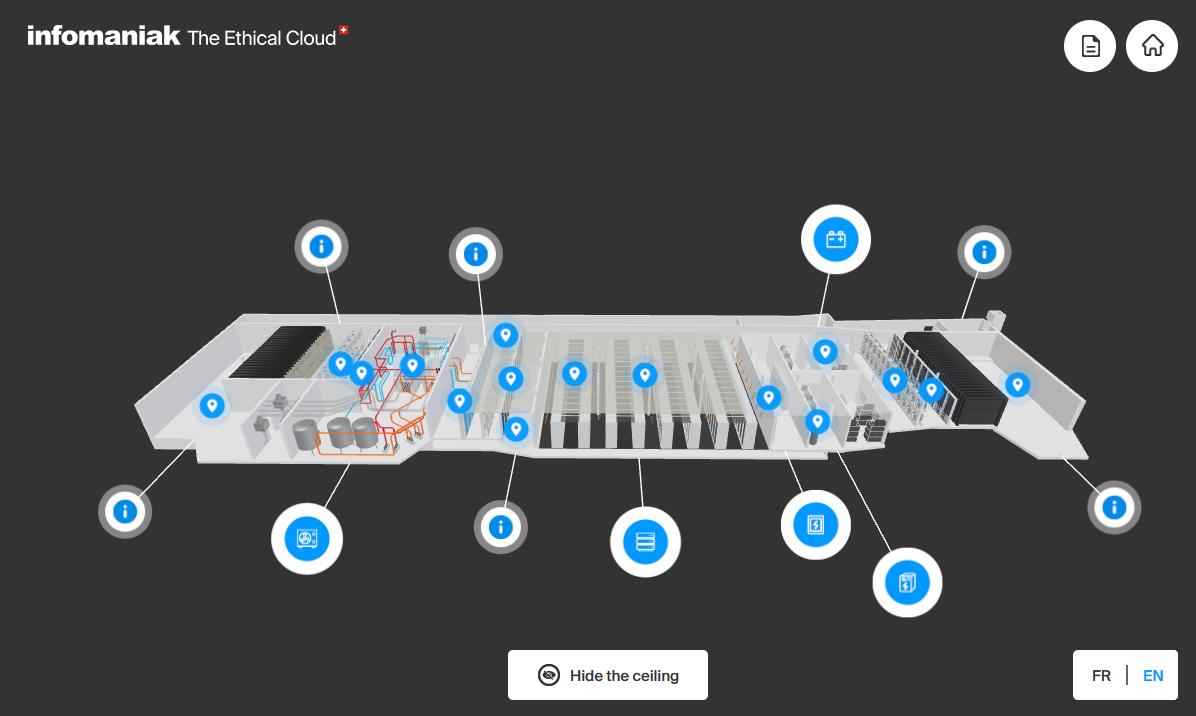
Now let’s take a closer look at the D4 data centre, a brand-new data centre considered to be the most environmentally friendly, built by the Swiss company Infomaniak.
Deploying datacenters
Understanding the general functioning of digital infrastructures is one thing, but they don’t appear overnight. Before installing a data center, telecommunication networks or electronic component factories, physical, political, environmental and economic conditions must be negotiated. Just like maintenance, this phase reveals in part what it really costs to develop these infrastructures. Thus, this deployment is not trivial and must be understood by both policy makers and the citizens who will live with these infrastructures.
Infrastructure is an idea, a vision or an ideal, but it is also a practice, a commitment and a long term endeavor. (Ribes, Universal informatics: Building cyberinfrastructure, interoperating the geo-sciences, p.299)
Data centers are like any industrial complex and need to meet several conditions to be deployed and used. For instance, the location choice of a data center is influenced by the following characteristics:
- privileged access to the electricity grid (source station)
- privileged access to internet fibre network (backbone)
- low natural risks (eruptions, floods, etc.)
- access to cheap land
- low cost or preferential electricity rate
- tax benefits or tax reductions
- potentially access to a water network
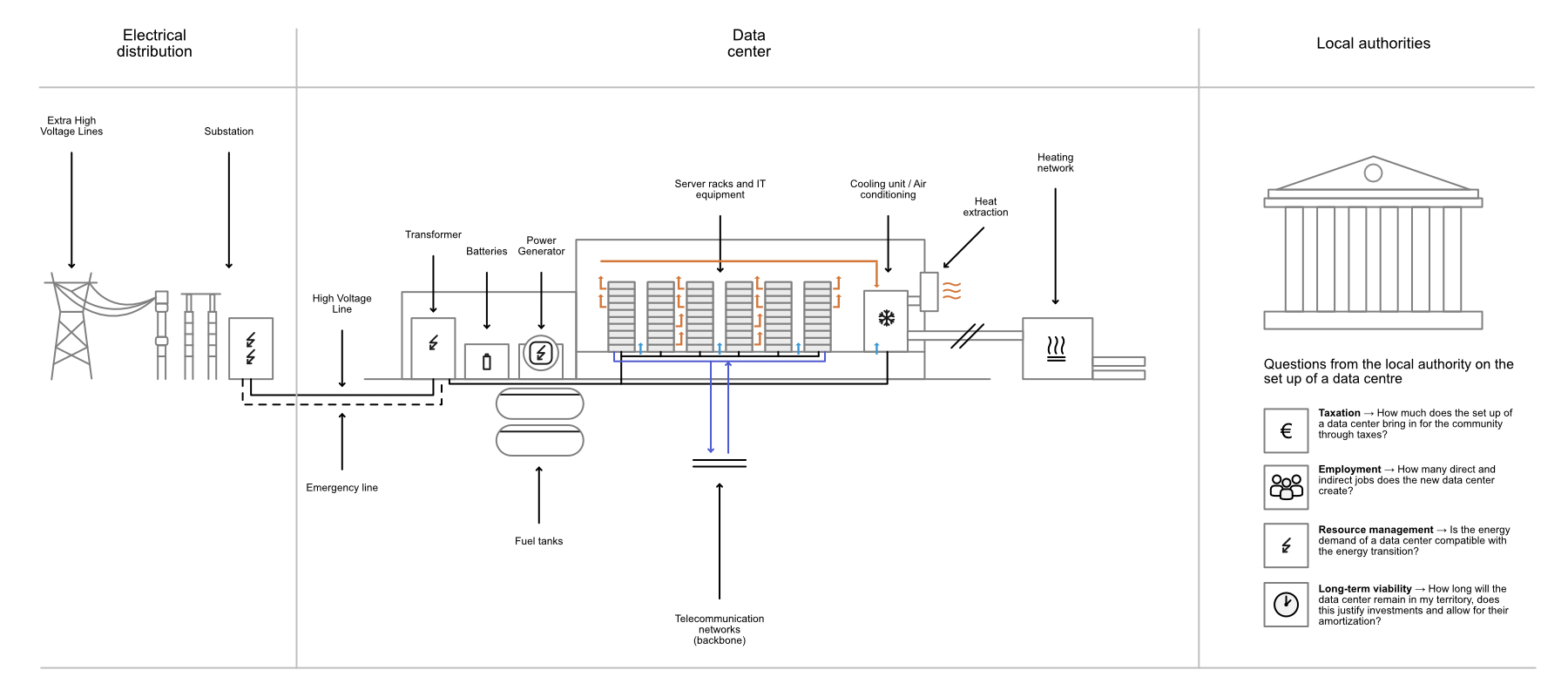
Beyond servers and network equipment, it means that inside a data center you will find power lines, going to a transformer and also to batteries, along with fuel tanks and power generator to take over in case of power failure. The transformer will send power to IT equipment (servers, etc), to the cooling unit and to the rest of the facility. Like any industry, data center operators need to negotiate with local authorities to establish itself in the local area and its infrastructures.
Submitting a data centre project to a local authority is generally a lengthy exercise, and one that tends to remain discreet in order to avoid the interests of competitors and local opposition. Here you can browse Amazon Web Services’ data centre project in the town of Gilroy here. Data center projects are typically designed in phases, increasing capacity and demand of the infrastructure with each step of the phasing. In that case, Amazon is securing land (438,500 square feet) and is giving a list of the infrastructure and equipment need for the project : backup generation, battery systems, their own substation, a water pipeline, security fencing and protection from storms.
A data centre is never just about servers; this type of industry involves a whole range of local and national players and relies heavily on access to existing infrastructure. However, the scale of the tech giants’ new data centre projects means that they now have to create their own infrastructure for both energy and water supplies. This does not mean, however, that this eases the burden they place on an area.
Important
Related activity : Datacenter attractivness in France
Electrical network tensions
One of the most important controversies surrounding data centres is their significant electricity usage. From an ecological perspective, electricity production is a significant source of environmental impacts. According to the IPCC, electricity and heat production accounted for one third of total greenhouse gas (GHG) emissions in 2019. In France, both RTE and ADEME estimate that data centres consume around 10 TWh per year, accounting for around 2% of total French consumption. Globally, the IAE estimates consumption at around 415 TWh in 2024.
Important
Related activity : Electricity Map
However, electricity consumption is not the only issue. In order to access the grid, data centres must issue a demand to the grid operator for connection. Usually, operators cannot discriminate between different demands, so the ‘first come, first served’ rule applies. Since power availability is limited, this creates tension and conflicts of use.
In France, the total power demand from the data centre industry is 28.6 GW. Of this, 18 GW has already been reserved by RTE, the French grid operator. For comparison, installed power in France was 164.5 GW in 2025. This creates a risk of conflicts over usage, both globally and locally. In areas where the grid is already saturated, such as Marseille, the construction of new data centres could jeopardise other projects.
Globally, the French grid exports large amounts of electricity, sometimes at a loss. This has led to discussions about the potential of data centres to support the grid. However, France planned the production of this electricity in the context of the energy transition (e.g. electrification of vehicles, heating and industry). While the transition in production is proceeding as planned, the transition in consumption is slower than anticipated. Thus, implementing data centres could consume the electricity dedicated to future planned usages, it would lock in the power for datacenters.
Furthermore, there is no guarantee that data centres will be able to adapt to the intermittency of the new power capacity (solar and wind power), putting in question their participation in the stability of the grid.
Important
Related case study : Tension of the Irish electrical grid
Water stress
Certain definitions must be established when discussing environmental issues related to water. Used water is not lost from the biosphere. Rather, it can be transferred from one watershed — a geographical area where water flows to a specific point — to another, typically through evaporation. It is important to distinguish between withdrawn water — the total amount of water used in a process — and used water — the total amount of water removed from a watershed.
Another important distinction is that between the different ways in which water is used inside a data centre:
- inside IT rooms, where it is often mixed with glycol in order to extract heat directly from the IT equipment via direct liquid cooling (DLC).
- inside cooling production units.
- in heat extraction units employing evaporative cooling.
Regarding the first two types of usage, water is used in a closed circuit, meaning that issues relating to water withdrawal are limited to system leakage and the replacement of water. A mere fraction of the amount used in evaporative cooling.
Legacy larger (hyperscaler) data centers typically use regular evaporative water cooling, especially in the western part of the United States. This technique consumes a lot of water that is removed from the original watershed. However, these areas experience varying degrees of water stress. Some of these data centers may require a significant amount of water in relation to territorial capacities and may potentially create conflicts of use.
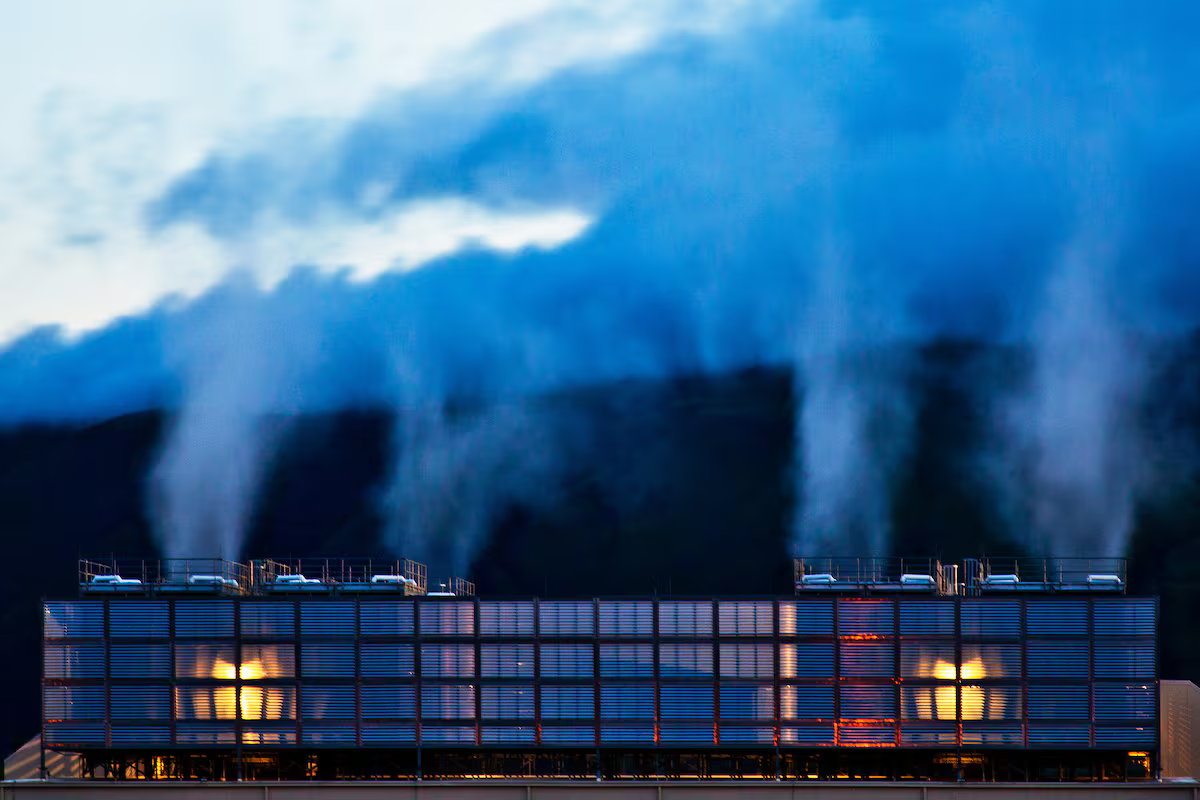
There are other ways of extracting heat from datacenters such as freecooling or adiabatic cooling which uses much less water than regular evaporative cooling technologies.
Important
Related activity : Cooling technologies
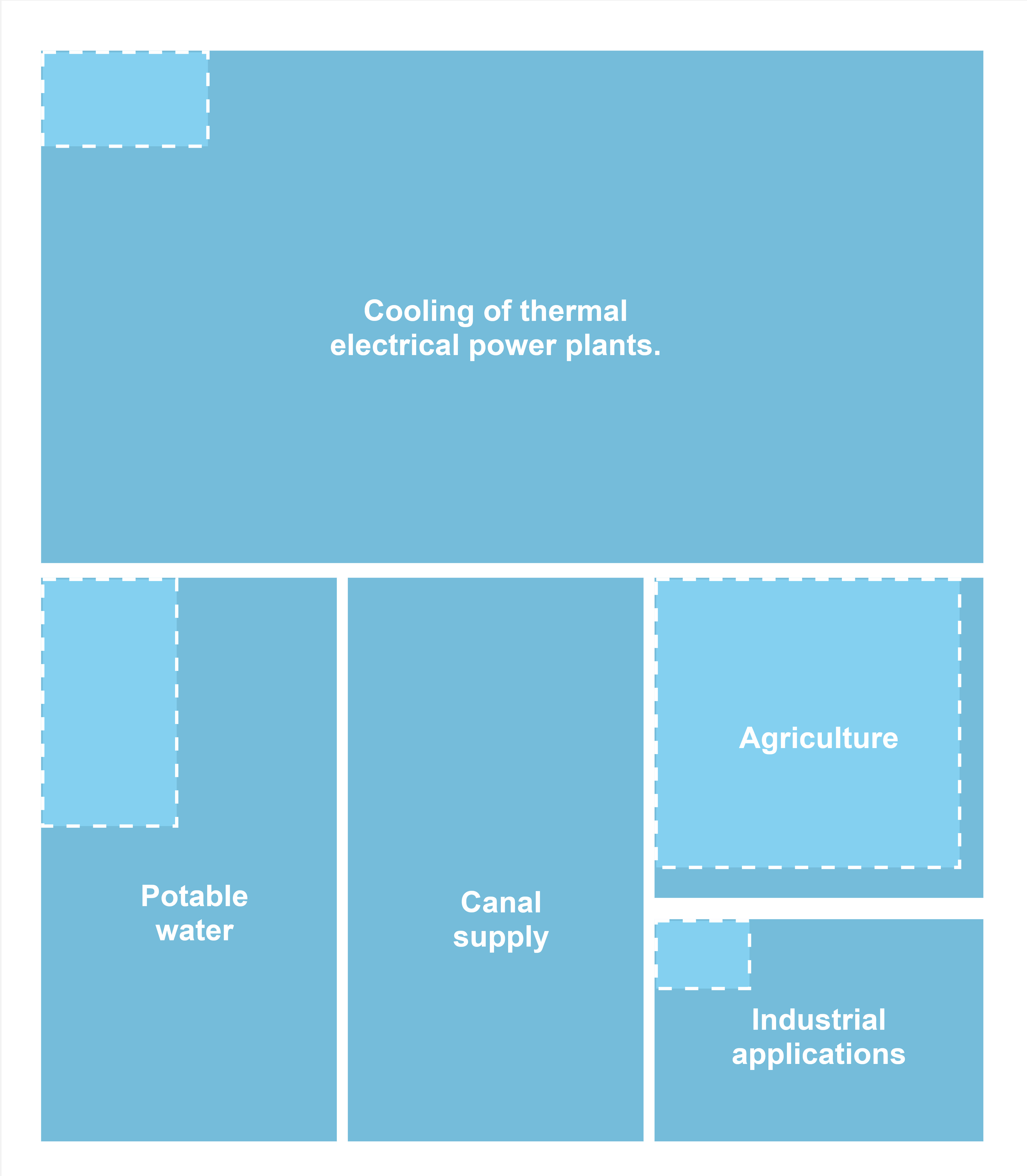
Beyond the cooling techniques (direct water footprint), the origin of the electricity is a major problem. Indeed, water is needed to produce electricity in power plants equipped with steam turbines or hydroelectric dams. On average the water consumption intensity for electricity generation for 2023 in U.S.A. was 4.52 liters per kilowatt-hour and 47.45 for water withdrawal (Berkley Lab, 2023). In this sense, water stress can affect the production of electricity but also data centers that use water cooling.
Water stress is set to accelerate in many parts of the world, and water supply and management issues will become increasingly pressing for many data centres. As a result, the construction of new data centres is increasingly contested, as was recently the case in Talavera de la Reina, Spain, where Meta planned to build a €1 billion ($1.1 billion) data centre. Meta expects the facility to use about 665 million liters (176 million gallons) of water a year, and up to 195 liters per second during “peak water flow,” according to a technical report (see Bloomberg’s article). Meanwhile, the central region of Castilla La Mancha, which produces a quarter of all Spanish grain, is expected to lose 80% to 90% of this year’s harvest (2023), and water restrictions loom large. The same is happening in London, where Thames Water is considering measures to cut down the water used by some datacenters according to the Register.
A final critical point is confidence in the water consumption forecasts provided by data centre operators. The case of a Microsoft data centre in Amsterdam is illustrative: Microsoft had forecast annual water consumption of between 12 and 20,000 m³. In reality, however, this infrastructure consumed 84,000 m³ of water in 2021, while an independent expert hired by Microsoft re-estimated the centre’s annual water consumption at around 100,000 m³. Microsoft explains that the data centre’s hydraulic cooling circuit is only opened when outside temperatures exceed 25°C. However, for its calculations, the company used weather data from the year before it moved in, during which Hollands Kroon only had six summer days above 25°C. In 2021, there were 22. And this year, the record is likely to be even worse. Hence, the big difference between estimates and reality.
Land use
When data centres replace agricultural land or forest, this land usage replacement participates in the artificialisation of soil, responsible for the loss of biodiversity and carbon sink. But this is not specific to datacenters, but general to all artificialisation.
However, since datacenters need to be implemented in areas with access to specific resources, they often install themselves in existing industrial parks where power is available, limiting access to other industries.
Rising controversies around the western world
Water, Electricity, Land : The ecological controversies around datacenter are exacerbate by the conflict of use around those ressources already in stress due in part to the ecological crisis. While datacenters are getting access to those ressources most of the value they generate does not benefit to local communities.
The collective “Tu nube seca mi río” (Your cloud dries up my river) in Spain have raised the question of water withdrawal, a critical issue in a country subject to important water stress. They have launched a judicial action against AWS for their datacenter in Tarragona. In the US, where the electricity market is liberalized and prices are determined by offer and demand, the rise of electricity costs for local communities has been one of importance. In France, questions around the preemption of electricity by datacenters instead of other industries arise. The NGO data4good has launched an action against the biggest project of “AI Campus” in Europe in Fouju.
Important
Related case study : Greening Datacenters in Marseille
GenAI : Harder, Better, Faster, Stronger
We’ll learn more about it at the end of this class, but generative AI transforms the material conditions of data centres. In particular, the electrical intensity of existing and future genAI infrastructures is on a different scale to that of regular data centres (5 to 10 times more per m^2). This has consequences for the architecture of data centres (e.g. new cooling methods, switching to high voltage, etc.). It also intensifies conflicts over the use of electricity and water in some parts of the world, and gives rise to new collective actions.
Resources
Syllabus
- Gauthier Roussilhe, Territorialising digital systems, the example of data centers, 2021
To go further
- Arzhel Younsi, Building DReaMeRS: How and why we opened a datacenter in France, Wikimedia Tech blog, 2022
- META, Meta Data Centers
- Hubblo, Key Facts About the Water Footprint of Data Centers—What Are We Talking About? When? How? How Much?, 2026
- ADEME, Prospective d’évolution des consommations des data centers à court, moyen et long terme de 2024 à 2060, 2026