Case study: Producing environmental data on the material backbone of genAI
Tip
This case study is based on an academic publication.
GPUs form the material backbone of genAI. They are specialised equipment designed for matrix calculations, such as those performed during the training and inference of neural networks. In this case study, we will examine the production of an environmental account of GPUs in the context of a lack of transparency from manufacturers.
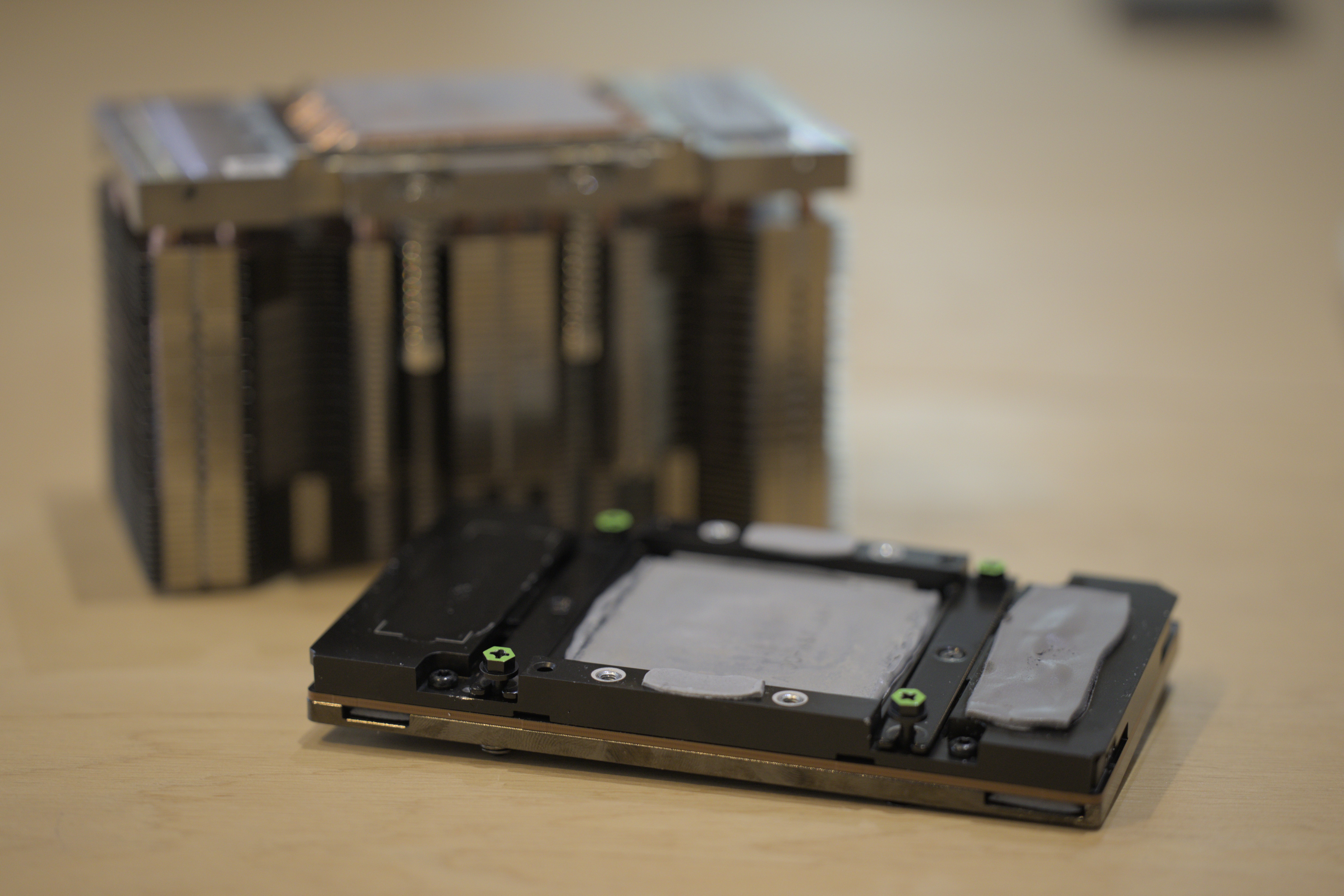
Hunting for GPUs
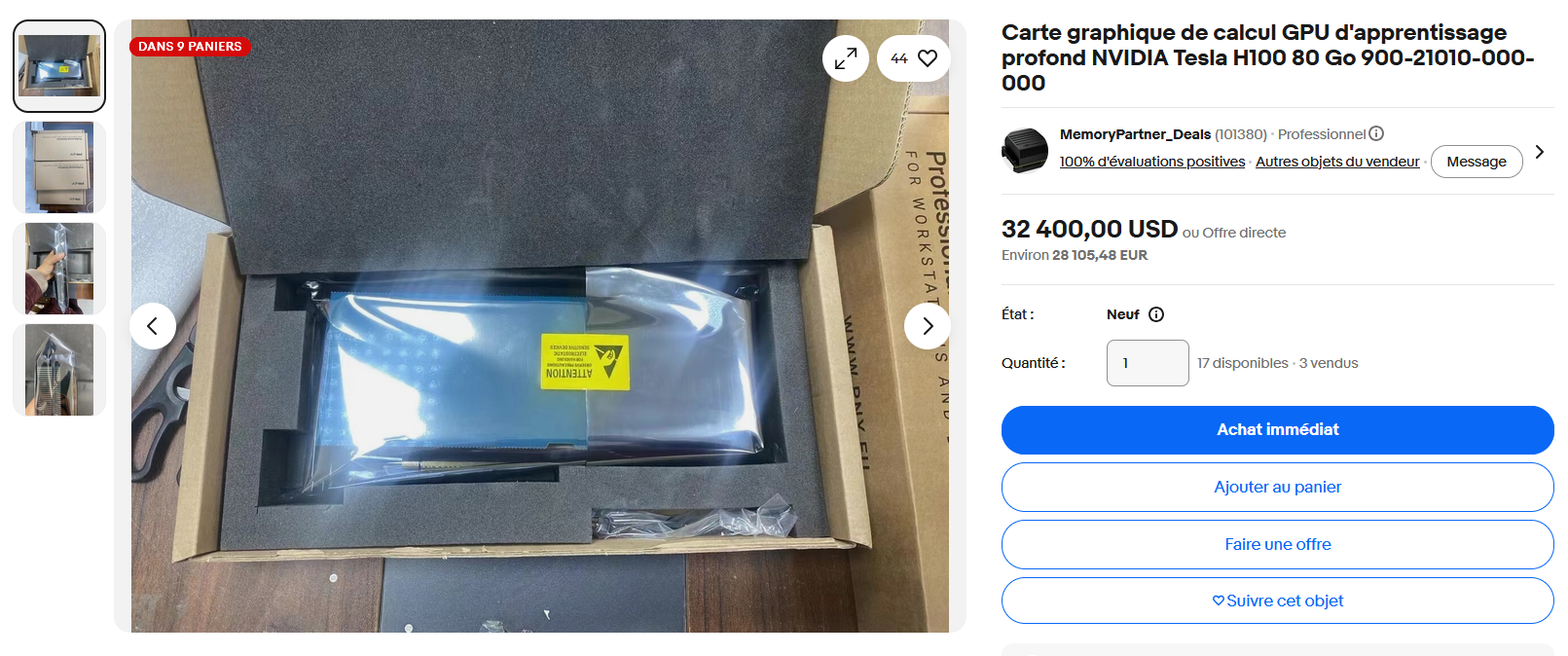
The first step of this study was to search for GPUs. This was a difficult task since these devices are worth tens of thousands of dollars, are in short supply, and are subject to various regulations (waste regulations, the US ban, etc.). Several techniques were employed, including acquiring a second-hand card on Chinese eBay and extracting a broken card from a major cloud provider with the help of an informant within the company.
Dismantling GPUs
As Nvidia does not provide detailed documentation on the composition of these cards, we had to dismantle them and document their composition using a reverse engineering method.
Identify, count, measure, weigh
Documenting the composition of a card involves identifying and counting its components, and describing each one by its shape, type and weight. This is a very meticulous process, since the components are sometimes very small.
Dissolving GPUs
However, some characteristics remain out of reach. Indeed, most components are encapsulated in an epoxy (plastic) package, which does not allow the die (integrated circuit) inside to be documented. The size of the die in particular is mandatory for assessing its impact. To overcome this limitation, practitioners usually make assumptions. However, since the size of the epoxy package is not proportional to the size of the die, these assumptions are often very inaccurate.
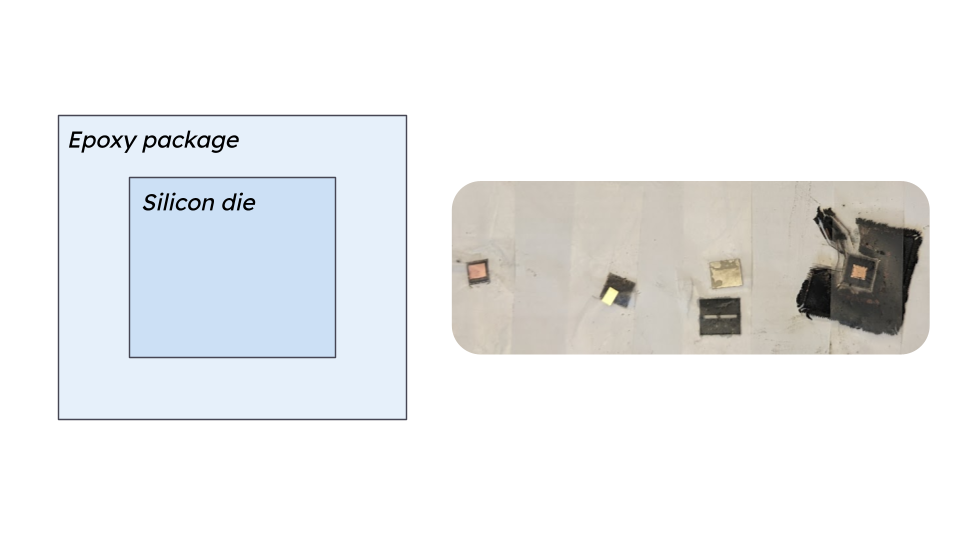
To obtain more precise measurements, we dissolved the package in acid to reveal the die inside.
Crushing GPUs
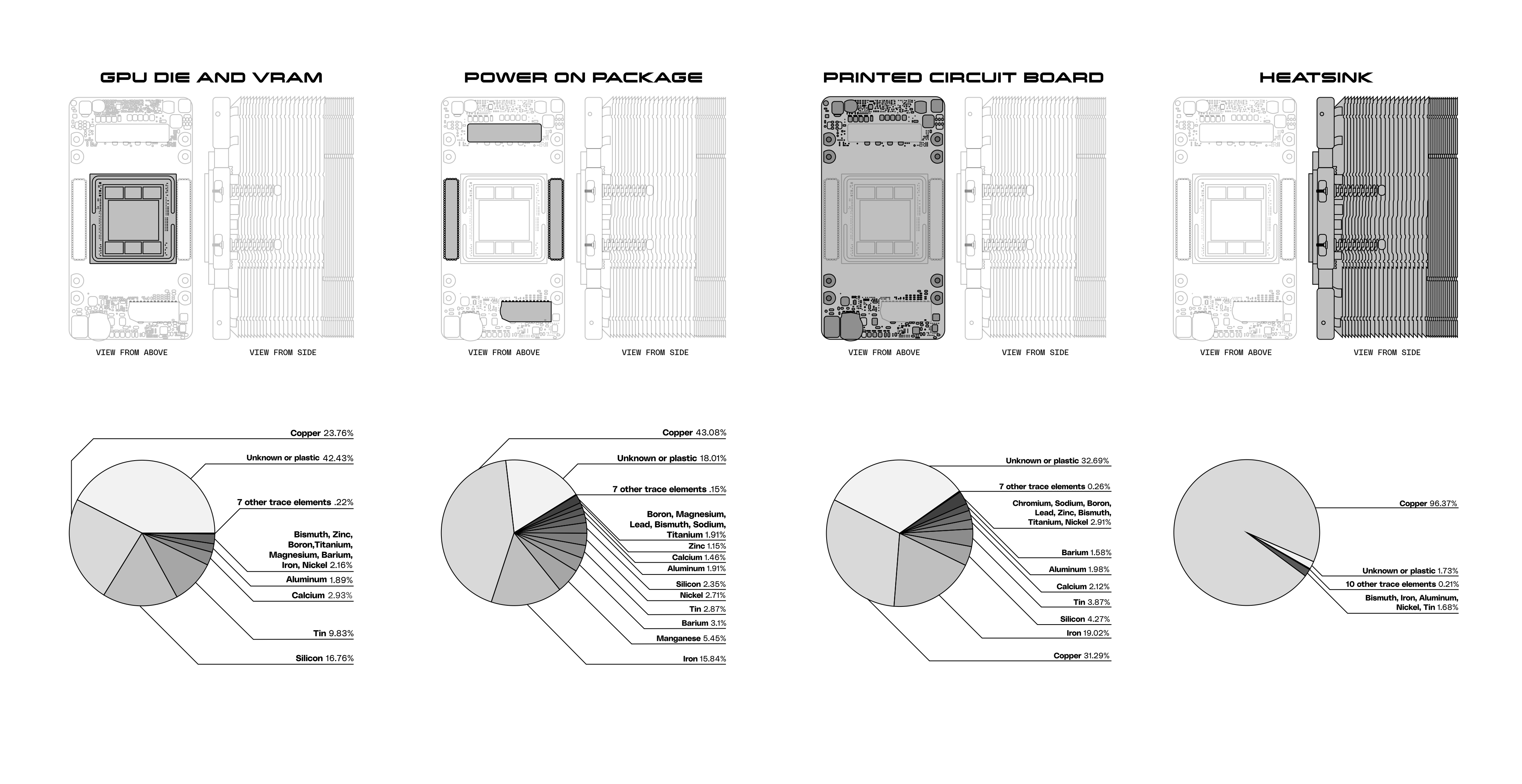
By documenting the technical characteristics of the cards, we were able to assess the environmental impact of manufacturing the devices. However, to obtain a more precise account of the impact of upstream processes such as mineral and metal mining and purification, we needed to determine the elemental composition of the cards.
To obtain this, we crushed the card in an industrial grinder, burned the dust to remove the organic matter (plastics) and passed the remaining dust through a spectrometer.
Translate into environmental data
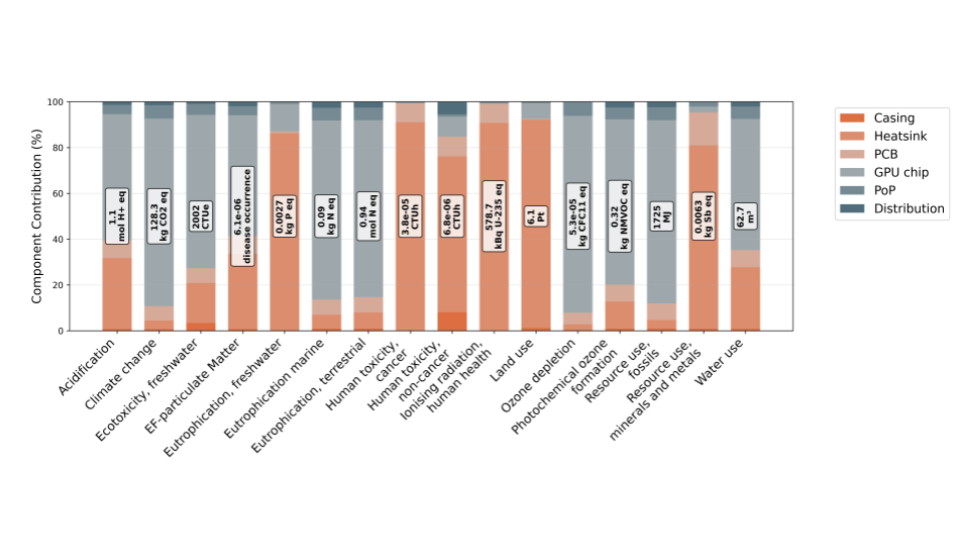
All the data we created constitutes the inventory of our environmental analysis. To translate this data into environmental figures, we used an LCA database which lists the environmental impact of sub-processes, such as producing 1 kg of copper or manufacturing 1 cm² of wafer using 3 nm technology.
Using LCA software, we convert our inventory into a comparable environmental account expressed in kgCO₂eq, m³ of water, MJ, and so on.
Conclusion
This case demonstrates the opacity of manufacturers of digital equipment, particularly in the genAI sector. It also shows the amount of energy and resources needed for the research community to create environmental accounts using reverse engineering techniques, resulting in a basic and imprecise, yet transparent, figure regarding the impact of such important equipment on the genAI value chain.